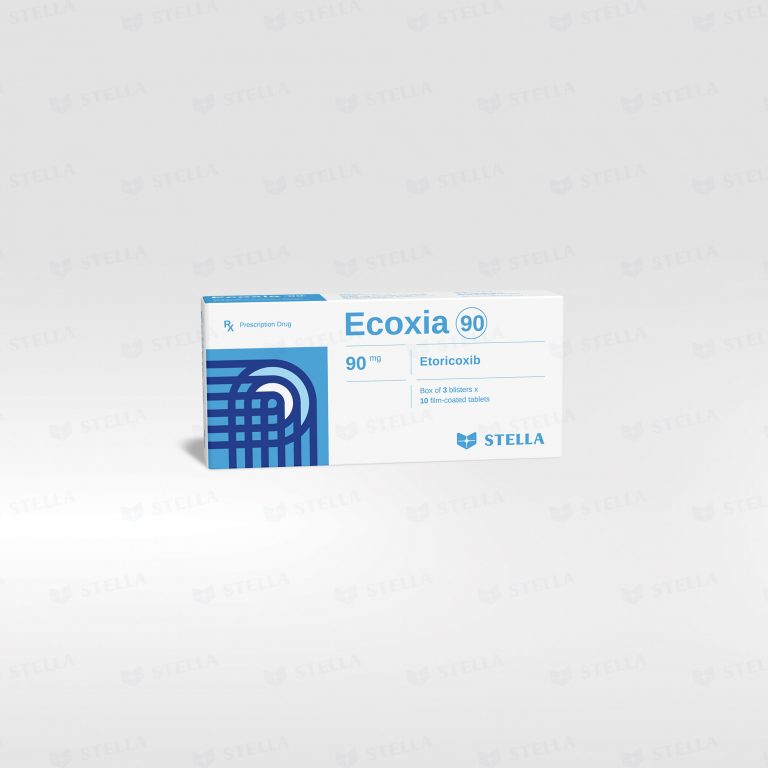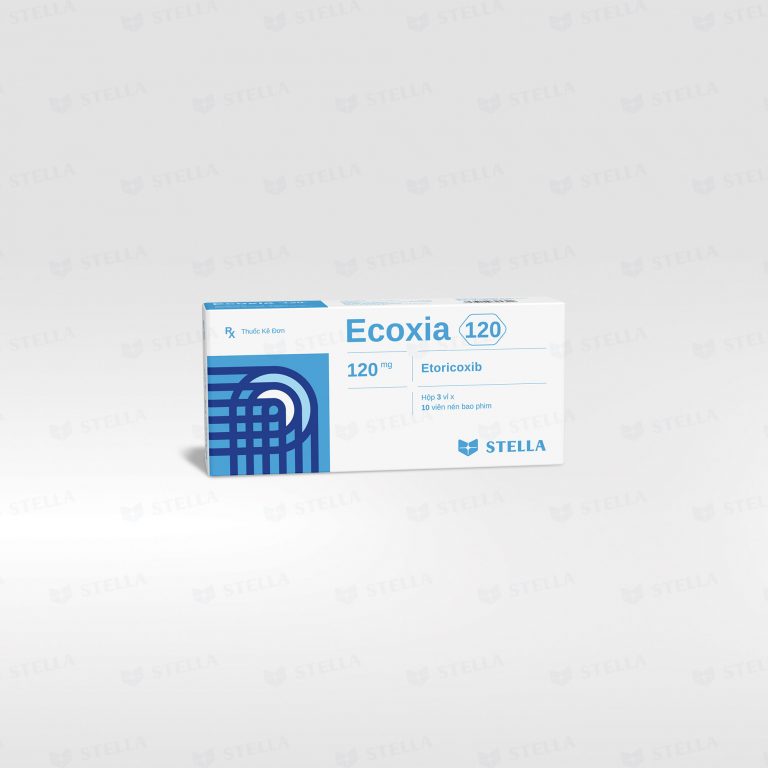
PRODUCT FILTER
Categories
Type
Type

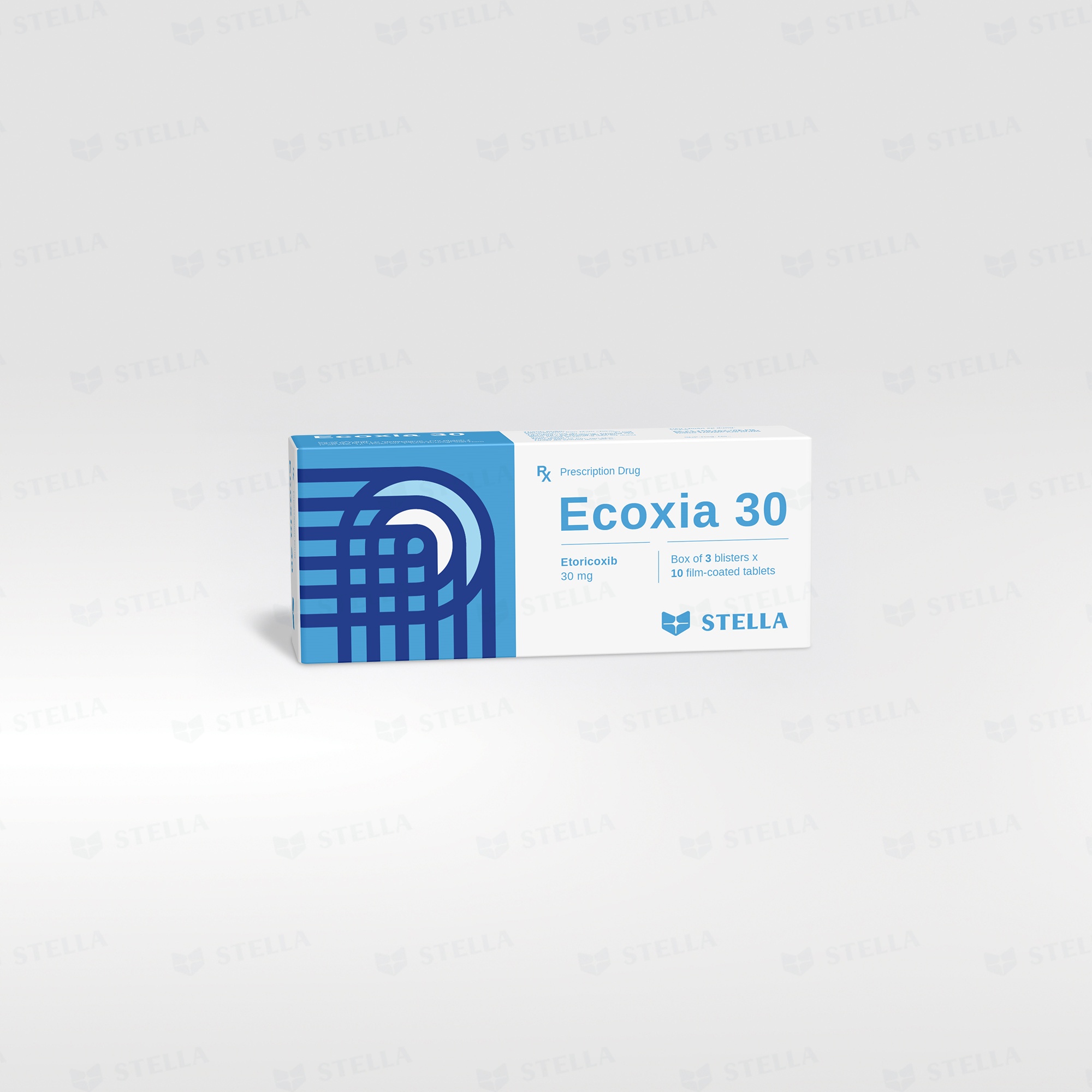
Ecoxia 30
Rx

Orally administered etoricoxib is well absorbed. The absolute bioavailability is approximately 100%. Following 120 mg once-daily dosing to steady state, the peak plasma concentration was observed at approximately 1 hour (Tmax) after administration to fasted adults.

Pack size Box of 30 tablets
Shelf-life 24 months
Composition Etoricoxib
Dosage forms and strengths Film-coated tablet: 30 mg
Product code :

PRESCRIBING INFORMATION

Indications

  • Acute and chronic signs and symptoms of osteoarthritis and rheumatoid arthritis,
  • Ankylosing spondylitis,
  • Acute gouty arthritis,
  • Acute pain, including primary dysmenorrhoea,
  • Moderate pain associated with dental surgery.

Dosage

  • Osteoarthritis:
    Recommended dose: 30 mg once daily.
    In some patients who do not respond, increase the dose to 60 mg once daily.
  • Rheumatoid arthritis, ankylosing spondylitis:
    Recommended dose: 60 mg once daily.
    In some patients who do not respond, increase the dose to 90 mg once daily.
    Once the patient is clinically stable, it may be appropriate to reduce the dose to 60 mg once daily.
  • Acute pain:
    For acute pain, Etoricoxib should only be used during the acute symptomatic phase. Recommended dose: 120 mg once daily.
  • Acute gouty arthritis:
    Recommended dose: 120 mg once daily.
  • Post-dental surgery pain:
    Recommended dose: 90 mg once daily, limited to a maximum of 3 days.

Usage

  • Oral use.
  • It may be taken with or without food.
  • Hypersensitivity to the etoricoxib or to any of the excipients.
  • Active peptic ulceration or active gastro-intestinal (GI) bleeding.
  • Patients who, after taking acetylsalicylic acid or NSAIDs including COX-2 (cyclooxygenase-2) inhibitors, experience bronchospasm, acute rhinitis, nasal polyps, angioneurotic oedema, urticaria, or allergic-type reactions.
  • Pregnancy and lactation.
  • Severe hepatic dysfunction (serum albumin < 25 g/l or Child-Pugh score ≥ 10).
  • Estimated renal creatinine clearance < 30 ml/min.
  • Children and adolescents under 16 years of age.
  • Inflammatory bowel disease.
  • Congestive heart failure (NYHA II-IV).
  • Patients with hypertension whose blood pressure is persistently elevated above 140/90 mmHg and has not been adequately controlled.
  • Established ischaemic heart disease, peripheral arterial disease, and/or cerebrovascular disease.
  • Patients who have recently undergone coronary artery bypass graft surgery or angioplasty.
  • Risk of cardiovascular thrombotic events

Very common

  • Abdominal pain.

Common

  • Alveolar osteitis,
  • Oedema/fluid retention,
  • Dizziness, headache,
  • Palpitations, arrhythmia,
  • Hypertension,
  • Bronchospasm,
  • Constipation, flatulence, gastritis, heartburn/acid reflux, diarrhea, dyspepsia/epigastric discomfort, nausea, vomiting, oesophagitis, oral ulcer.
  • ALT increased, AST increased,
  • Ecchymosis,
  • Asthenia/fatigue, flu-like disease.
  • There is a further increase in the risk of gastrointestinal adverse effects (gastrointestinal ulceration or other gastrointestinal complications) when etoricoxib is taken concomitantly with acetylsalicylic acid (even at low doses).
  • Systemic non-aspirin nonsteroidal anti-inflammatory drugs (NSAIDs) cause an increased risk of serious cardiovascular thrombotic events, including myocardial infarction and stroke, either of which can be fatal. This risk may occur as early as the first weeks of treatment and may increase with duration of use. The cardiovascular thrombotic risk has been observed most consistently at higher doses. To minimize the risk for an adverse cardiovascular event in patients treated with Ecoxia, prescribe the lowest effective daily dose for the shortest duration possible.
  • Administration of etoricoxib may cause a reduction in prostaglandin formation and, secondarily, in renal blood flow, and thereby impair renal function. Patients at greatest risk of this response are those with pre-existing significantly impaired renal function, uncompensated heart failure, or cirrhosis.
  • Caution is advised in patients with a history of heart failure, left ventricular dysfunction, or hypertension, and in patients with edema.
  • In patients with extracellular dehydration (due to the use of potent diuretics), the dehydration should be treated before administering Etoricoxib.
  • Additionally, the risk of cardiovascular complications (myocardial infarction, ischemic heart disease) should be monitored.
  • Etoricoxib may mask fever and other signs of inflammation.
  • Caution should be exercised when co-administering etoricoxib with warfarin or other oral anticoagulants.
  • The use of etoricoxib, as with any medicinal product known to inhibit cyclooxygenase/prostaglandin synthesis, is not recommended in women attempting to conceive.
  • Etoricoxib is contraindicated in pregnancy.
  • Women who use etoricoxib must not breast feed.
  • Patients who experience dizziness, vertigo or somnolence while taking etoricoxib should refrain from driving or operating machinery.