PRODUCT FILTER
Categories
Type
Type

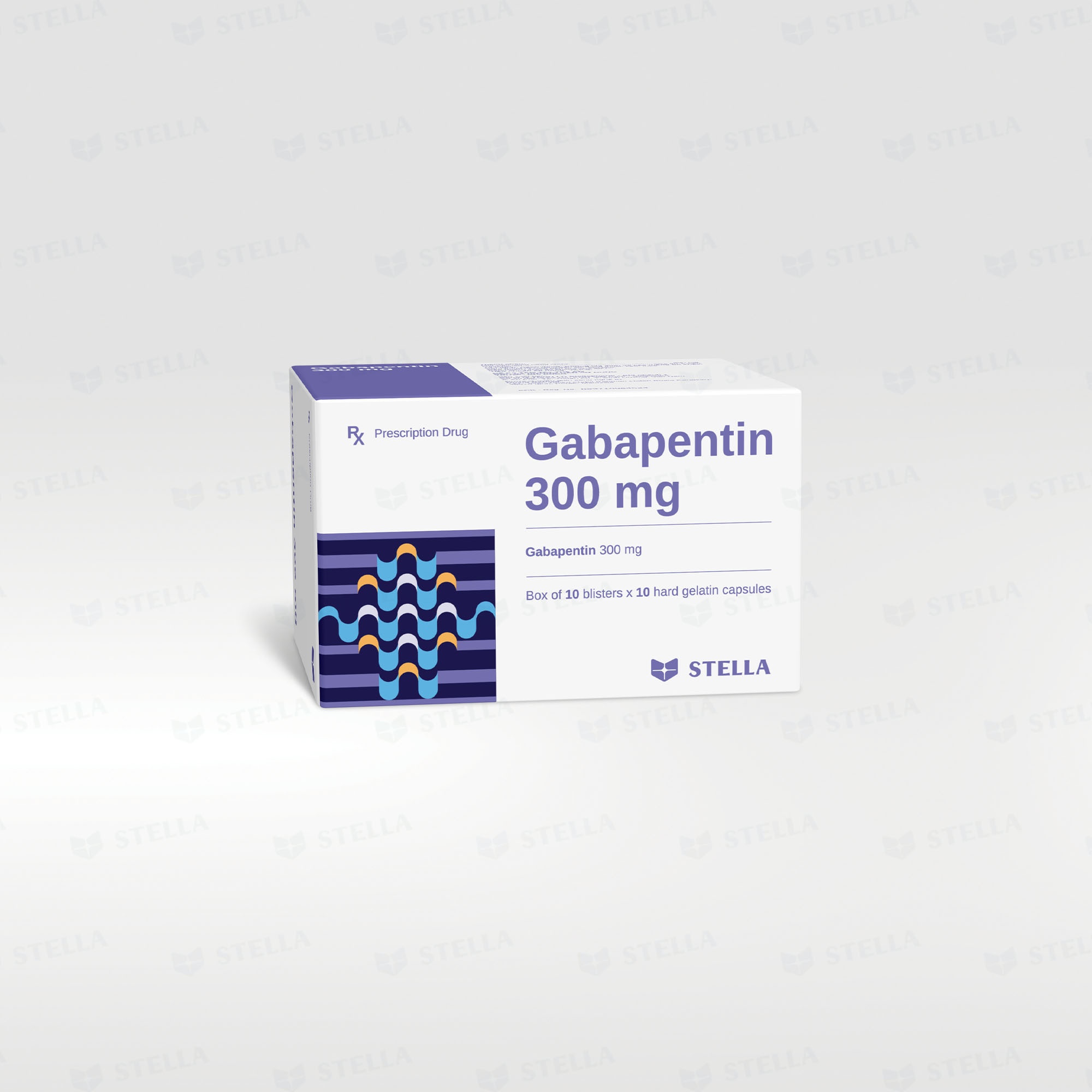
Gabapentin 300 mg
Rx

The bioavailability of gabapentine is not directly proportional to the dose. This means that as the dose increases, its bioavailability decreases. The drug reaches peak plasma concentrations 2-3 hours after oral administration and steady-state concentrations after 1-2 days.

Pack size Box of 30 capsules, 100 capsules
Shelf-life 36 months
Composition Gabapentin
Dosage forms and strengths Hard gelatin capsule: 300 mg
Product code :

PRESCRIBING INFORMATION

Indications

  • Adjunctive or monotherapy treatment in partial seizures, with or without recurrent generalized seizures.
  • Treatment of neuropathic pain such as painful diabetic neuropathy and post-herpetic neuralgia in adults.

Dosage
Adults and pediatric patients over 12 years of age:

  • Epilepsy:
    Day 1: 300 mg once daily.
    Day 2: 300 mg twice daily.
    Day 3: 300 mg three times daily.
    Or Day 1: 300 mg three times daily.
    Subsequently, the dose may be increased in increments of 300 mg (divided into 3 doses) every 2-3 days, based on the patient’s response, until an effective therapeutic dose is reached, usually 900-3600 mg/day, divided into 3 doses; maximum dose 4800 mg/day.
    The total daily dose should be divided equally into 3 doses, and the maximum interval between doses should not exceed 12 hours.
  • Treatment of neuropathic pain:
    Day 1: 300 mg once daily.
    Day 2: 300 mg twice daily.
    Day 3: 300 mg three times daily.
    Or Day 1: 300 mg three times daily.
    Subsequent doses may be increased in increments of 300 mg (divided into 3 doses) every 2-3 days, based on patient response, until an effective therapeutic dose is reached, with a maximum dose of 3600 mg/day.
    A slower titration of gabapentin may be appropriate for individual patients. The minimum time to reach a dose of 1800 mg/day is one week, to reach a dose of 2400 mg/day is a total of two weeks, and to reach 3600 mg/day is a total of three weeks.
    Dosage adjustment is recommended in patients with impaired renal function.
    For patients undergoing hemodialysis who have never used gabapentin, the starting dose is 300 mg to 400 mg, then reduced to 200 mg to 300 mg gabapentin after each 4-hour hemodialysis session.

Pediatric patients aged 3 to 12 years

  • Epilepsy
    The initial dose is 10 to 15 mg/kg/day divided into 3 doses per day and gradually increased to the effective dose over approximately 3 days.
    The effective dose in pediatric patients aged 5 years and older: 25 to 35 mg/kg/day, divided into 3 doses per day.
    The effective dose in pediatric patients aged 3 to under 5 years: 40 mg/kg/day, divided into 3 doses per day.
    The maximum time interval between doses should not exceed 12 hours.

Administration

  • Gabapentin is given orally with or without food.
  • When there is a need for dose reduction, discontinuation, or substitution with an alternative medication, this should be done gradually over a minimum of 1 week.
  • Hypersensitivity to gabapentin or to any ingredient of the drugs.
  • Patients younger than 18 years.

Possible adverse reactions

  • Viral infections.
  • Pneumonia, respiratory infections, urinary tract infections, infections, otitis media.
  • Leukopenia (decreased white blood cell count).
  • Anorexia, increased appetite.
  • Defiant attitude, confusion and emotional disturbances, depression, anxiety, stress, abnormal thinking.
  • Drowsiness, dizziness, ataxia.
  • Seizures, hyperactivity, dysarthria, amnesia, tremor, insomnia, headache, paresthesia, decreased sensation, abnormal coordination, nystagmus, increased reflexes, decreased or absent consciousness.
  • Visual disturbances, such as amblyopia (amblyopia), double vision.
  • Hypertension, vasodilation.
  • Dyspnea, bronchitis, pharyngitis, cough, rhinitis.
  • Vomiting, nausea, dental abnormalities, gingivitis, diarrhea, abdominal pain, indigestion, constipation, dry mouth or throat, flatulence.
  • Facial edema, purpura (most commonly described as bruising from physical injury), rash, itching, and acne.
  • Joint pain, muscle pain, back pain, tremors.
  • Erectile dysfunction.
  • Fatigue, fever.
  • Peripheral edema, abnormal gait, weakness, pain, discomfort, flu-like symptoms.
  • Weight gain.
  • Abrupt discontinuation of anticonvulsant medications in epileptic patients may induce status epilepticus.
  • Some patients may experience increased seizure frequency or a new seizure pattern with gabapentin.
  • Gabapentin is generally considered ineffective in absence seizures.
  • Gabapentin is associated with dizziness and drowsiness, which may increase the risk of accidental injury (falls).
  • Post-marketing reports of confusion, unconsciousness, and mental deterioration have also been observed.
  • Therefore, patients should be advised to use the medication cautiously until they become familiar with its potential effects.
  • Caution should be exercised when using gabapentin concurrently with opioids due to the risk of central nervous system depression.
  • Drug rash with eosinophilia and systemic symptoms.  Severe, life-threatening systemic hypersensitivity reactions such as drug rash with eosinophilia and systemic symptoms (DRESS) have been reported in patients taking anticonvulsant medications, including gabapentin.
  • Anaphylaxis. Gabapentin can cause anaphylaxis. Signs and symptoms in reported cases have included difficulty breathing, swelling of the lips, throat, and tongue, and hypotension requiring emergency treatment.
  • Gabapentin should only be used in pregnant and breastfeeding women when absolutely necessary and after careful consideration that the benefits outweigh the risks.
  • Gabapentin may cause drowsiness, dizziness, or other related symptoms.