PRODUCT FILTER
Categories
Type
Type

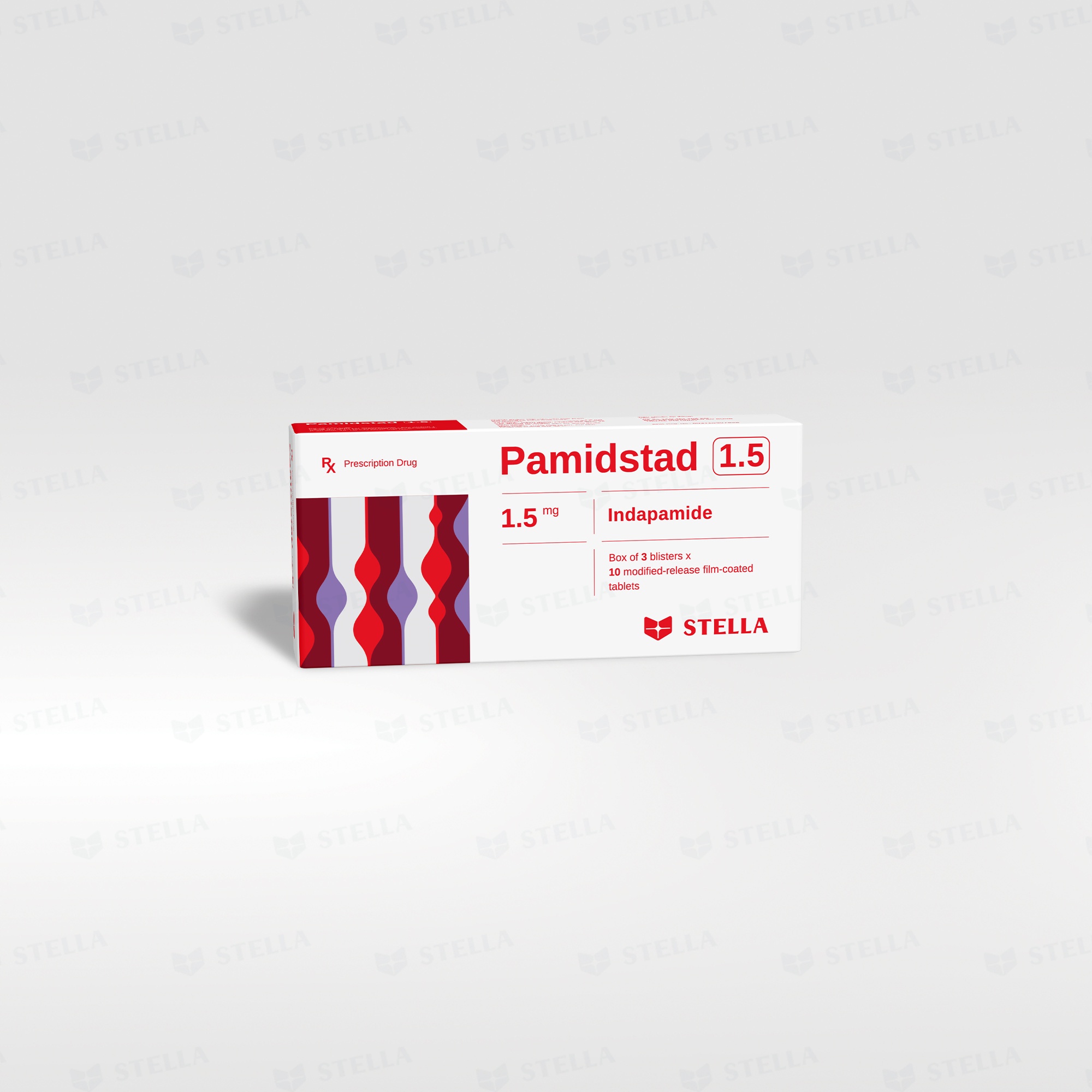
Pamidstad 1.5
Rx

Indapamide is a thiazide-like diuretic that promotes the excretion of sodium and chloride, thereby increasing urine output and lowering blood pressure.

Pack size Box of 30 tablets, 100 tablets
Shelf-life 24 months
Composition Indapamide
Dosage forms and strengths Modified-release film-coated tablet: 1.5 mg
Product code :

PRESCRIBING INFORMATION

Indications

  • Indicated in essential hypertension in adults.

Dosage

  • One tablet per 24 hours.
    At higher doses the antihypertensive action of indapamide is not enhanced but the saluretic effect is increased.
  • Elderly patients can be treated with Indapamide when renal function is normal.

Administration

  • Orally taken in the morning,
  • To be swallowed whole with water and not chewed.
  • Hypersensitivity to indapamide, to other sulfonamides or to any ingredients of the drug.
  • Severe renal failure.
  • Hepatic encephalopathy or severe impairment of liver function.
  • Hypokalaemia.
  • Children and adolescents.

Possible adverse reactions

  • Hypokalaemia.
  • Hypersensitivity reactions.
  • Maculopapular rashes.
  • Blood glucose levels should be monitored periodically during treatment with indapamide, particularly in patients with established or suspected diabetes.
  • Caution should be exercised when administering indapamide to patients with hyperparathyroidism or thyroid disorders. If hypercalcemia and hypophosphatemia occur during treatment, the drug must be discontinued before parathyroid function tests are performed.
  • This medication should not be used in patients with rare hereditary conditions such as galactose intolerance, total lactase deficiency, or glucose-galactose malabsorption.
  • Indapamide should not be used during pregnancy or breastfeeding.
  • Pamidstad 1.5 does not affect alertness; however, certain reactions associated with a drop in blood pressure may occur in some patients, particularly at the start of treatment or when combined with other antihypertensive agents. The ability to drive or operate machinery may be impaired. Patients should observe their body’s response to the medication before driving or operating machinery.