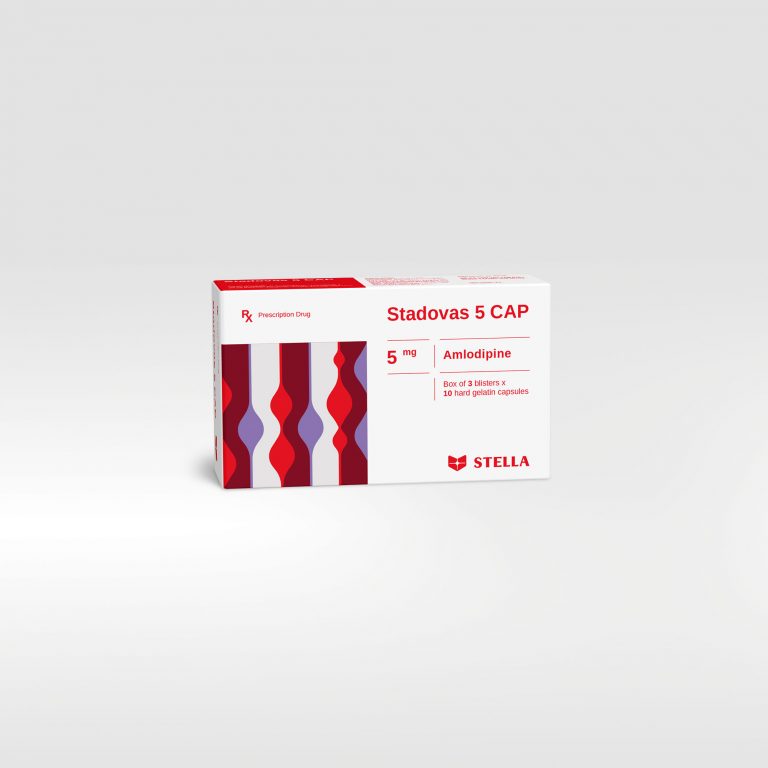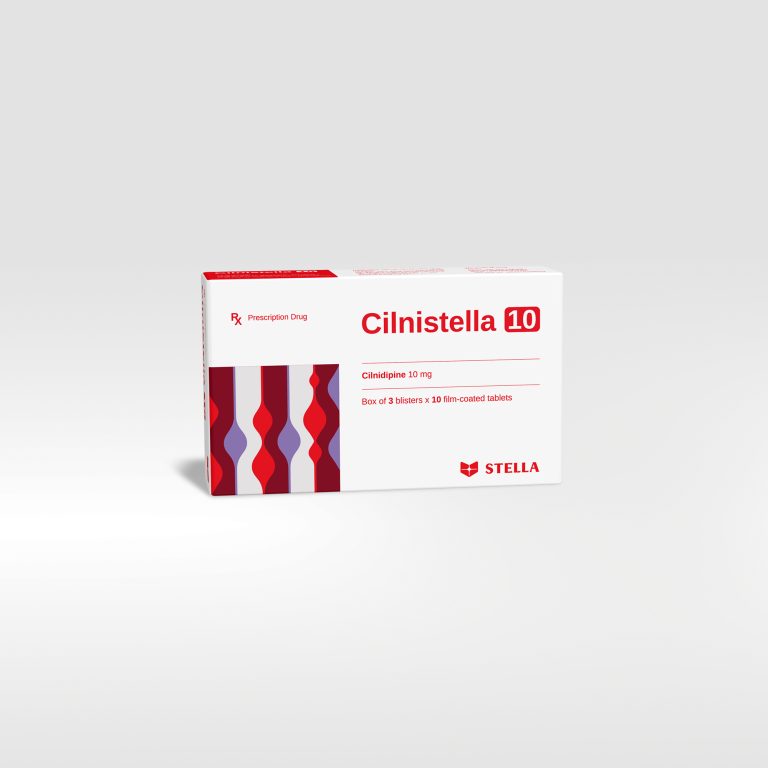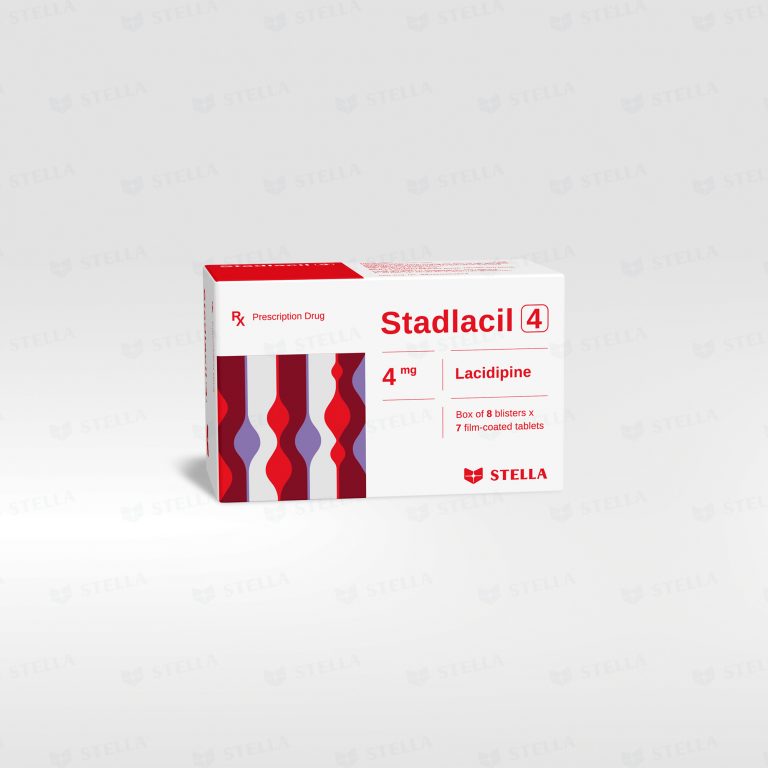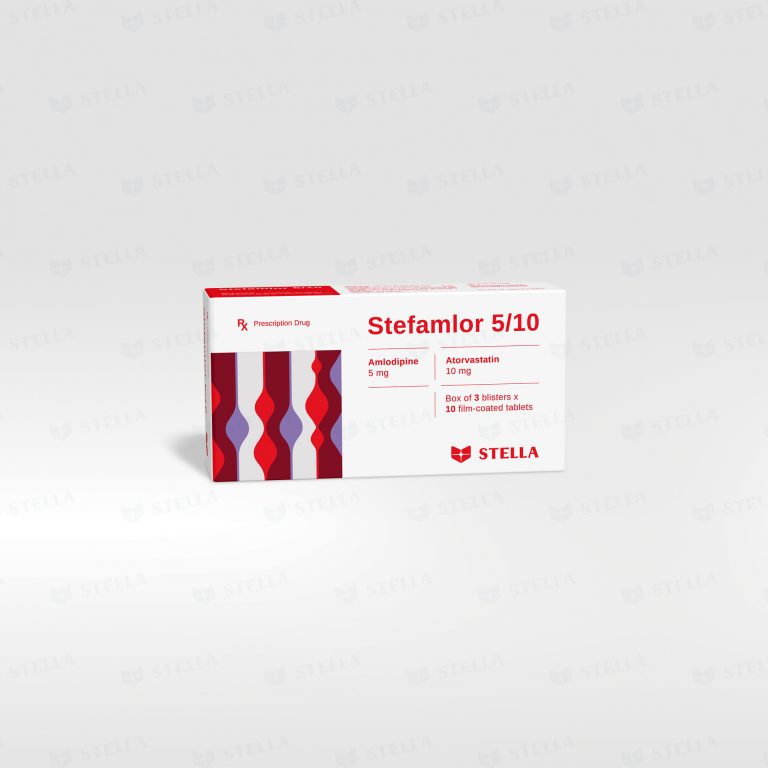
PRODUCT FILTER
Categories
Type
Type

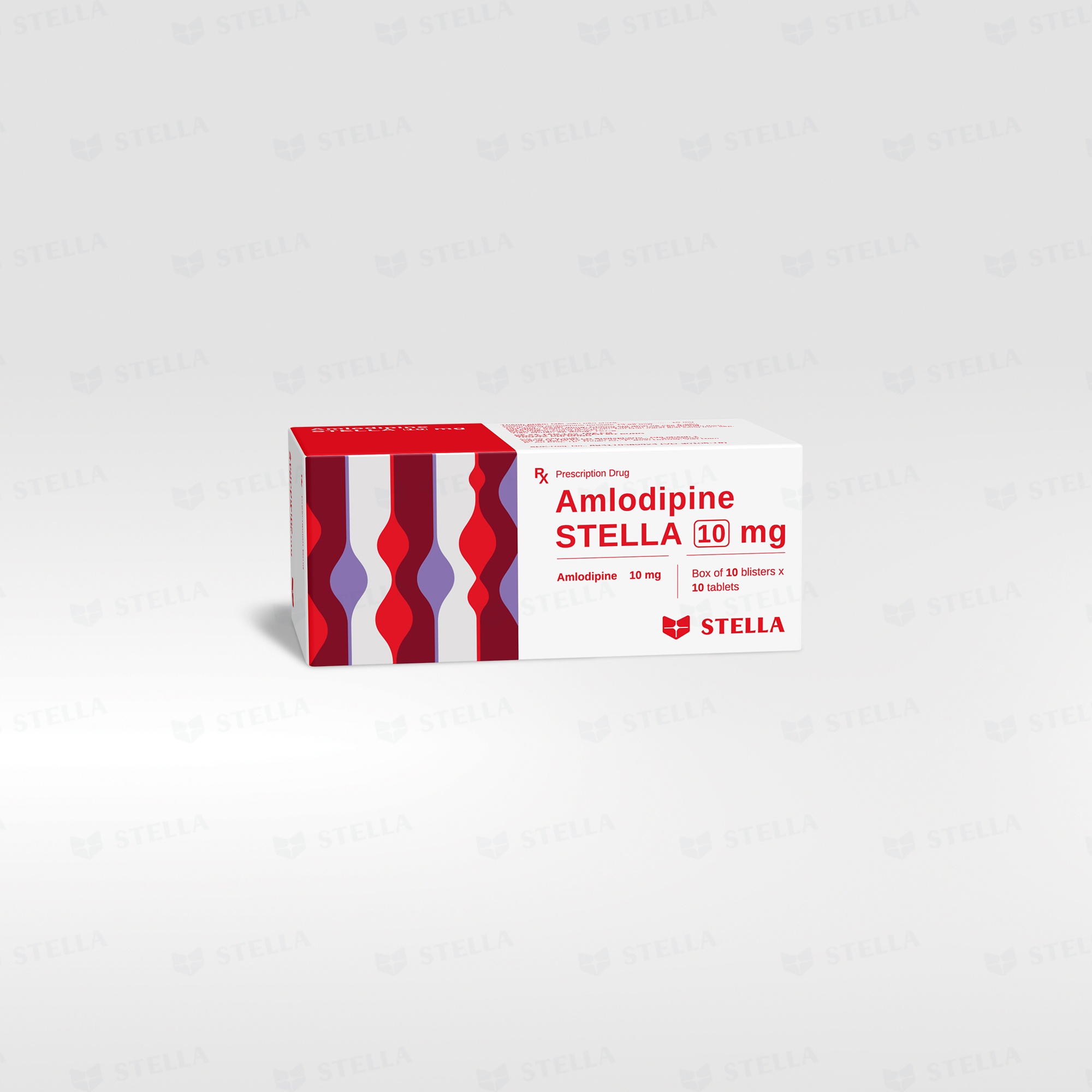
Amlodipine STELLA 10 mg
Rx

Amlodipine exerts antihypertensive action by a direct vasodilating effect on the smooth muscles surrounding the peripheral arterial blood vessels, with less effect on the cardiac muscle calcium channels. Amlodipine therefore does not worsen atrioventricular (AV)-conduction in heart, and amlodipine does not give any negative inotropic effect.

Pack size Box of 30 tablets, 50 tablets, 100 tablets
Shelf-life 36 months
Composition Amlodipine
Dosage forms and strengths Tablet: 10 mg
Product code :

PRESCRIBING INFORMATION

Indications

  • Hypertension.
  • Chronic stable angina pectoris.
  • Vasospastic (Prinzmetal’s) angina.

Dosage

  • Adults: For both hypertension (in combination with a thiazide diuretic, alpha blocker, beta blocker, or an angiotensin converting enzyme inhibitor) and angina (monotherapy or in combination with other anti-anginal medicinal products in patients with angina that is refractory to nitrates and/or to adequate doses of beta blockers), the initial dose is 5 mg amlodipine once daily which may be increased to a maximum dose of 10 mg depending on the individual patient’s response.
  • Children with hypertension from 6 – 17 years of age: The starting dose is 2.5 mg once daily (using other suitable preparation), up-titrated to 5 mg once daily if blood pressure goal is not achieved after 4 weeks.
  • Elderly: Increase of the dosage should take place with care.
  • Hepatic impairment: Start at the lower end of the dosing range. Amlodipine should be titrated slowly and monitor closely in patients with severe hepatic impairment.
  • Renal impairment: Normal dosage is recommended.

Usage

  • Administered orally.
  • Hypersensitivity to any of components of the drug or dihydropyridine derivatives.
  • Severe hypotension.
  • Shock (including cardiogenic shock).
  • Obstruction of the outflow tract of the left ventricle.
  • Haemodynamically unstable heart failure after acute myocardial infarction.

Most common

  • Headaches, dizziness, somnolence;
  • Palpitations;
  • Flushing;
  • Abdominal pain, nausea;
  • Oedema, fatigue.
  • Patients with heart failure.
  • Patients with impaired hepatic function.
  • Pregnancy (only use when there is no safer alternative and when the disease itself carries greater risk). Account the benefit of breast-feeding to the child and therapy to the mother.