PRODUCT FILTER
Categories
Type
Type

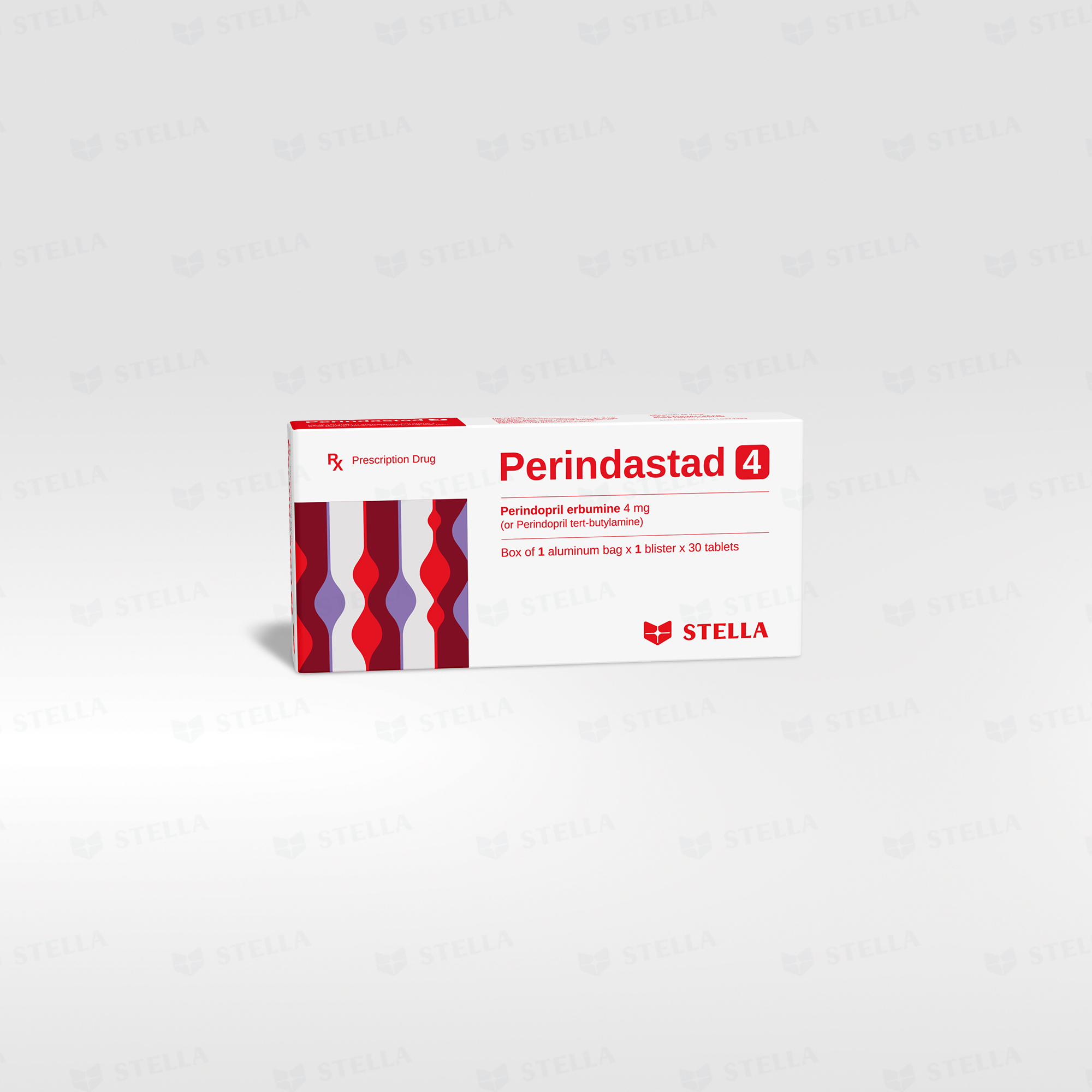
Perindastad 4
Rx

Perindopril is an inhibitor of the enzyme that converts angiotensin I into angiotensin II (ACE), acts through its active metabolite, perindoprilat.

Pack size Box of 30 tablets
Shelf-life 36 months
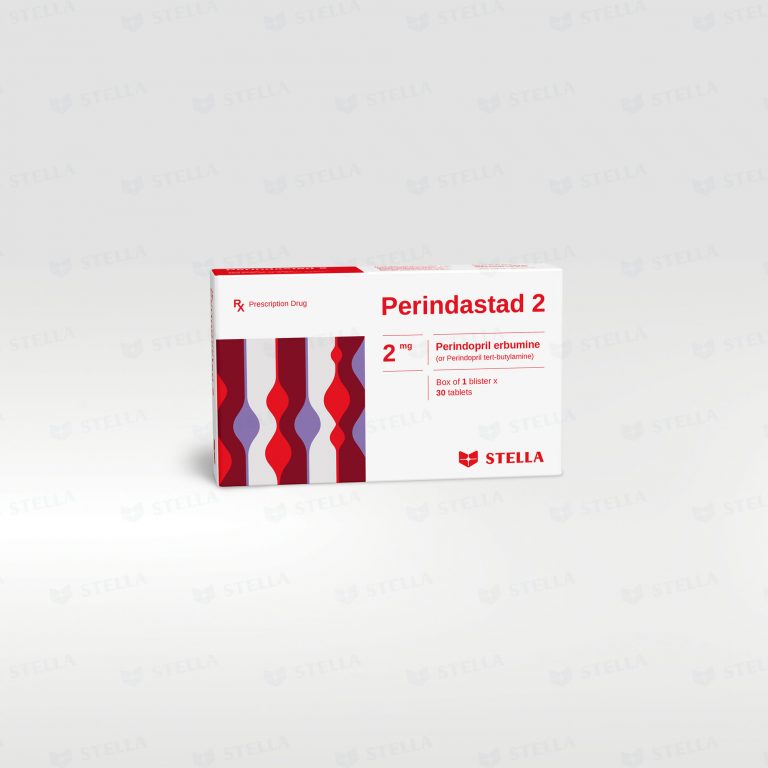
Composition Perindopril erbumine
Dosage forms and strengths Tablet: 4 mg
Product code :

PRESCRIBING INFORMATION

Indications

  • Hypertension;
  • Symptomatic heart failure,
  • Reduction of risk of cardiac events in patients with a history of myocardial infarction and/or revascularization.

Dosage

  • Hypertension
    Perindopril may be used in monotherapy or in combination with other classes of antihypertensive therapy. Commence with 4 mg, may be increased to 8 mg once daily after one month. Elderly patients commence with 2 which may be progressively increased to 4 mg after one month then to 8 mg if necessary depending on renal function.
  • Symptomatic heart failure
    Start with 2 mg, may be increased by increments of 2 mg at intervals of no less than 2 weeks to 4 mg once daily if tolerated.
  • Stable coronary artery disease
    Start with 4 mg once daily for two weeks, then increased to 8 mg once daily, depending on renal function and provided that 4 mg dose is well tolerated.
    Elderly patients should receive 2 mg once daily for one week, then 4 mg once daily the next week, before increasing the dose up to 8 mg once daily depending on renal function.
    Patients with renal impairment:
    + ClCr 30-60 ml/min: 2 mg/day;
    + ClCr 15 – 30 ml/min: 2 mg, every other day; haemodialysed patients (dialysis clearance of perindoprilat is 70 ml/min, the dose should be taken after dialysis)
    + ClCr < 15 ml/min: 2 mg on the day of dialysis.

Usage

  • It is orally taken once daily in the morning before a meal.
  • Known hypersensitive to any of the active substance or excipients.
  • History of angioedema related to previous ACE inhibitors treatment.
  • Hereditary or idiopathic angioedema.
  • The concomitant use of perindopril with aliskiren containing products is contraindicated in patients with diabetes mellitus or renal impairment (GFR < 60 ml/min/ 1.73 m2).
  • Pregnancy and lactation.
  • Headache, disorders of mood and/or sleep disorders, asthenia;
  • Blood pressure not sufficiently controlled at the start of treatment;
  • Non-specific GI disorders, taste alteration, vertigo, cramp;
  • Urticaria;
  • Dry cough, irritative type.
  • Patients with volume or salt restriction, prolonged diuretic therapy, dialysis, diarrhea, or vomiting, congestive heart failure.
  • Patients with unilateral or bilateral renal artery stenosis, preexisting renal impairment, or concomitant diuretic therapy.
  • Patients with renal impairment, diabetes mellitus, those receiving drugs that can increase serum potassium concentration.
  • Patients undergoing surgery or during anesthesia with agents that produce hypotension.
  • Patients should be aware of how they react to drug before driving or operating machinery.