PRODUCT FILTER
Categories
Type
Type

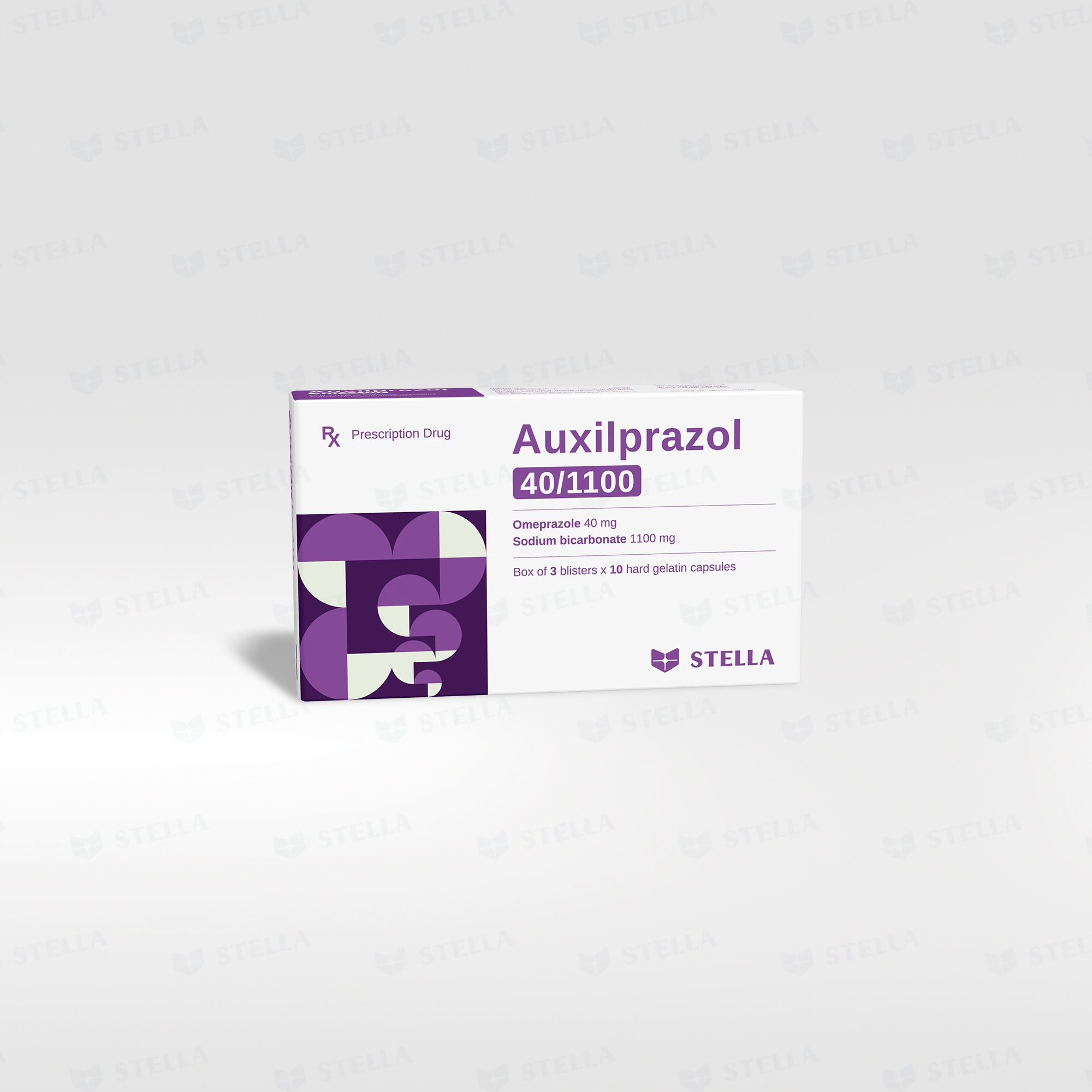
Auxilprazol 40/1100
Rx

The mean plasma omeprazole half-life following administration of omeprazole/sodium bicarbonate capsule or omeprazole/ sodium bicarbonate oral suspension in healthy subjects is approximately 1 hour (range 0.4 to 4.2 hours), and the total body clearance is 500 to 600 mL/min.

Pack size Box of 30 capsules, 100 capsules
Shelf-life 24 months
Composition Omeprazole 40 mg, Sodium bicarbonate 1100 mg
Dosage forms and strengths Hard gelatin capsule
Product code :

PRESCRIBING INFORMATION

Indications

  • Short-term treatment of gastric – duodenal ulcer.
  • Short-term treatment of heartburn and other symptoms associated with gastroesophageal reflux disease (GERD).

Dosage

  • Treatment of duodenal ulcer: 20 mg once daily in 4 weeks
  • Treatment of benign gastric ulcer: 20 mg once daily in 4 – 8 weeks
  • Treatment of symtptomatic GERD: 20 mg once daily in 4 weeks
  • Treatment of EE due to acid-mediated GERD: 20 mg once daily in 4 – 8 weeks
  • Maintenance of healing of EE due to acid-mediated GERD: 20 mg once daily not beyond 12 months

Usage

  • Auxilprazol 40/1100 is administered orally. Take on an empty stomach at least one hour before a meal.
  • Swallow capsules intact with water. Do not open the capsule and do not administer with liquids other than water.

  • Patients with known hypersensitivity to substituted benzimidazoles or to any component of the formulation.
  • Auxilprazol is contraindicated in patients receiving rilpivirine containing products.
  • Headache,
  • Diarrhea,
  • Abdominal pain,
  • Nausea.
  • In adults, symptomatic response to therapy with Auxilprazol does not preclude the presence of gastric malignancy.
  • Acute tubulointerstitial nephritis (TIN) has been observed in patients taking PPIs (including omeprazole). Discontinue Auxilprazol and evaluate patients with suspected acute TIN.
  • The sodium content of Auxilprazol products should be taken into consideration when administering to patients on a sodium-restricted diet or those at risk for developing congestive heart failure.
  • Avoid Auxilprazol in patients with Bartter’s syndrome, hypokalemia, hypocalcemia and problems with acid-base balance.
  • PPI therapy like Auxilprazol may be associated with an increased risk of Clostridium difficile-associated diarrhea, especially in hospitalized patients.
  • Discontinue Auxilprazol at the first signs or symptoms of severe cutaneous adverse reactions or other signs of hypersensitivity.
  • Avoid administration of PPIs for longer than medically indicated. If signs or symptoms consistent with CLE (Cutaneous lupus erythematosus) or SLE (Systemic lupus erythematosus) are noted in patients receiving Auxilprazol, discontinue the drug and refer the patient to the appropriate specialist for evaluation.
  • Avoid concomitant use of Auxilprazol with clopidogrel.
  • Daily treatment with Auxilprazol over a long period of time (e.g., longer than 3 years) may lead to malabsorption of cyanocobalamin (vitamin B12).
  • Consider monitoring magnesium and calcium levels prior to initiation of Auxilprazol and periodically while on treatment in patients with a preexisting risk of hypocalcemia (e.g.,hypoparathyroidism). Supplement with magnesium and/or calcium as necessary. If hypocalcemia isrefractory to treatment, consider discontinuing the PPI.
  • Avoid concomitant use of Auxilprazol with St. John’s wort or rifampin.
  • Serum chromogranin A (CgA) levels increase secondary to drug-induced decreases in gastric acidity. The increased CgA level may cause false positive results in diagnostic investigations for neuroendocrine tumors. Providers should temporarily stop Auxilprazol treatment for at least 14 days before assessing CgA levels and consider repeating the test if initial CgA levels are high.
  • In high-dose methotrexate administration, a temporary withdrawal of the PPI may be considered in some patients.
  • PPI use is associated with an increased risk of fundic gland polyps that increases with long-term use, especially beyond one year.
  • Avoid use of omeprazole/sodium bicarbonate in patients with hepatic impairment.
  • There are no adequate and well-controlled studies with Auxilprazol in pregnant women. There are no clinical data on the effects of omeprazole or sodium bicarbonate on the breastfed infant or on milk production. The developmental and health benefits of breast-feeding should be considered along with the mother’s clinical need for Auxilprazol and any potential adverse effects on the breastfed infant from Auxilprazol or from the underlying maternal condition.
  • There is no evidence that Auxilprazol affects the ability to drive or to operate machinery.