PRODUCT FILTER
Categories
Type
Type

Calcium Auxilto 1000 mg
OTC

Calcium ions are of crucial importance in the activation of biological systems. The stimulus threshold of excitable membranes depends on the extracellular Ca2+ concentration. Calcium ions are also involved in regulating the permeability of cell membranes. A lack of Ca2+ ions in the plasma increases neuromuscular excitability, while an excess reduces it.

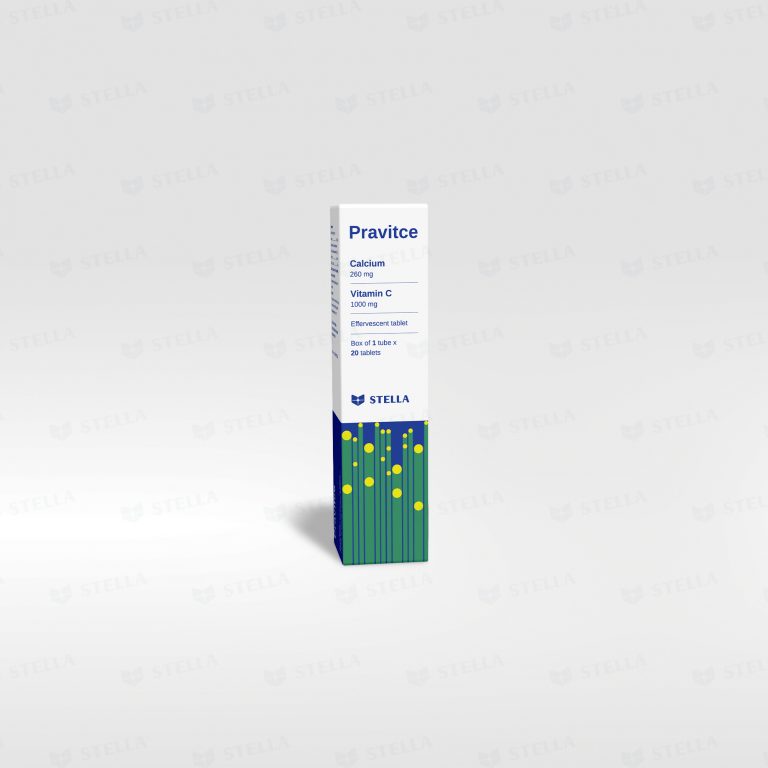
Pack size Box of 01 tube of 20 effevescent tablets.
Shelf-life 36 months
Composition Calcium (as calcium carbonate)
Dosage forms and strengths Effervescent tablet: 1000 mg.
Product code :

PRESCRIBING INFORMATION

Indications

  • Prevention and treatment of calcium deficiency.
  • Calcium supplement as an adjunct to specific therapy in the prevention and treatment of osteoporosis.
  • Rickets and osteomalacia, in addition to vitamin D3 therapy.

Dosage

  • Adults and children over 10 years old: 1000 mg (1 tablet) per day.

Usage

  • Oral administration.
  • The effervescent tablets should be dissolved in a glass of water (approx. 200 ml) and drunk. It may be taken with or without food.
  • Hypersensitivity to the active substance or to any of the excipients.
  • Diseases or conditions that can cause hypercalcemia or hypercalciuria.
  • Calcium-containing kidney stones, nephrocalcinosis.
  • Prolonged immobilization with concomitant hypercalciuria or hypercalcemia.

Common

  • Hypercalcemia,
  • Hypercalciuria.
  • Taking Calcium Auxilto 1000 mg increases the excretion of calcium in the urine. In the first few months after starting intake, this also increases the tendency to precipitate calcium salts and, under certain circumstances, to form stones in the kidneys and urinary bladder. This can be avoided by drinking plenty of fluids.
  • Absorptive hypercalciuria should be ruled out in patients with a family history of calcium-containing kidney stones.
  • In the case of renal insufficiency, Calcium Auxilto 1000 mg should only be used with ongoing monitoring of the calcium and phosphate concentrations in the blood and urine. During therapy with high doses of calcium, particularly if therapy is also administered with vitamin D, there is a risk of hypercalcaemia, which can result in kidney function disorders. In such patients, serum calcium levels and renal function should be monitored.
  • Calcium and alkali intake from other sources (diet, fortified foods, or other medicinal products) should be considered when Calcium Auxilto 1000 mg is used. When high doses of calcium are given concomitantly with alkaline agents (such as carbonates), milk-alkaline syndrome (Burnett’s syndrome) can result with hypercalcemia, metabolic alkalosis, renal failure, and soft-tissue calcification. When high doses are administered, serum and urinary calcium levels should be monitored.
    Instructions for use in specific patient groups:
  • Calcium carbonate is converted into soluble chloride in the stomach and is thus bioavailable. Solubility may be impaired and bioavailability reduced in patients with achlorhydria. However, bioavailability is ensured when these patients take the drug with food.
  • In patients who are also taking antacids, it should be taken into account that calcium carbonate also has acid-binding properties.
  • Calcium Auxilto 1000 mg contains lactose. Patients with rare hereditary problems of galactose intolerance, total lactase deficiency or glucose-galactose malabsorption should not take this medicine.
  • Calcium Auxilto 1000 mg contains aspartame. Aspartame is a source of phenylalanine. It may be harmful if you have phenylketonuria (PKU), a rare genetic disorder in which phenylalanine builds up because the body cannot remove it properly.
  • Neither non-clinical nor clinical data are available to assess aspartame use in infants below 12 weeks of age.
  • Calcium Auxilto 1000 mg contains less than 1 mmol sodium (23 mg) per tablet, that is to say essentially “sodium-free”.
  • If calcium deficiency occurs during pregnancy, Calcium Auxilto 1000 mg can be taken.
  • There are no data on the effect on the ability to drive or use machines. However, an impact is unlikely.