PRODUCT FILTER
Categories
Type
Type

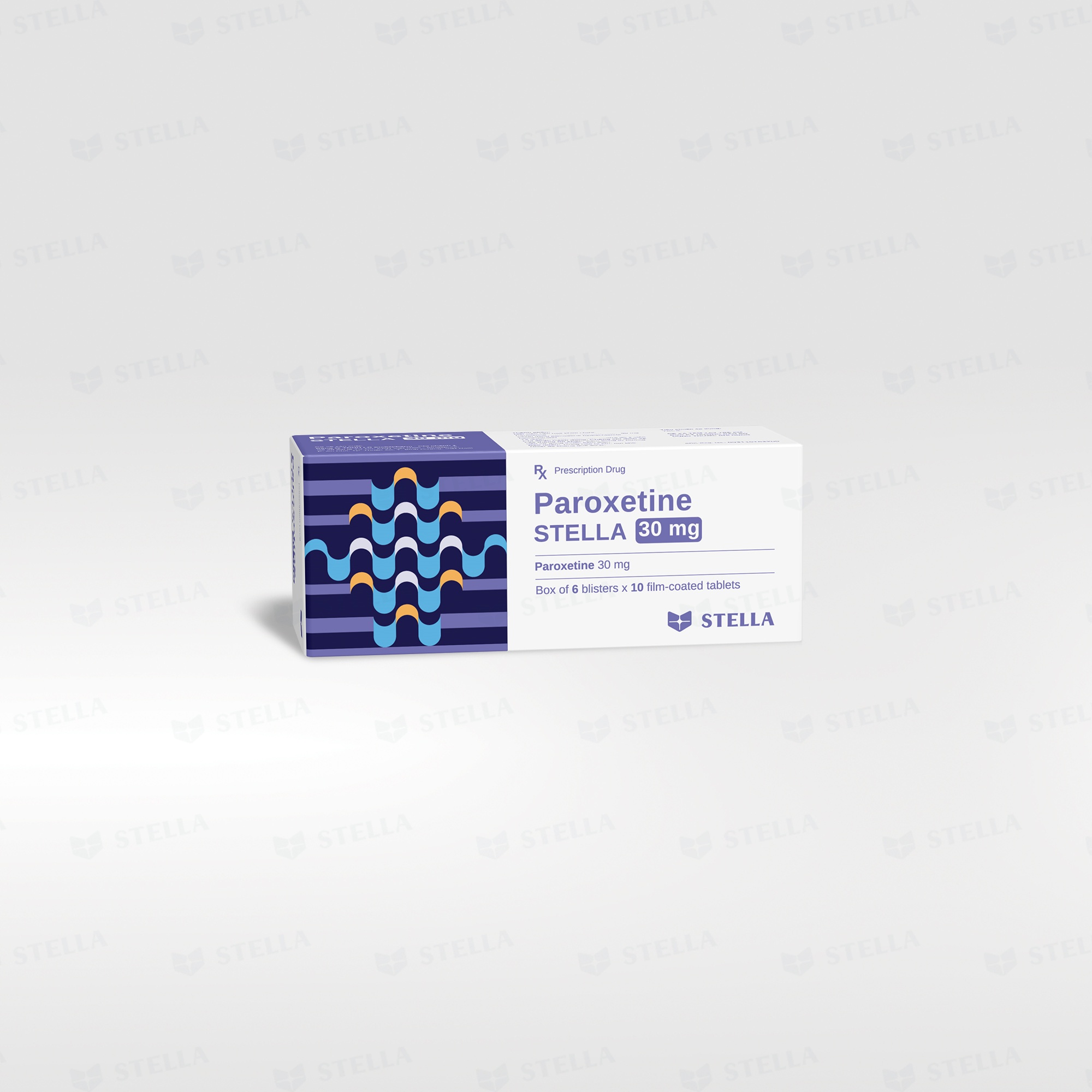
Paroxetine STELLA 30 mg
Rx

In the treatment of depressive disorders, paroxetine exhibits comparable efficacy to standard antidepressants. There is also some evidence that paroxetine may be of therapeutic value in patients who have failed to respond to standard therapy.

Pack size Box of 30 tablets, 60 tablets
Shelf-life 24 months
Composition Paroxetine
Dosage forms and strengths Film-coated tablet: 30 mg
Product code :

PRESCRIBING INFORMATION

Indications

Treatment of:

  • Major depressive episode,
  • Panic disorder, generalised anxiety disorder,
  • Post-traumatic stress disorder, obsessive compulsive disorder.

Dosage

Adults

  • Major depressive episode
    Starting dose: 20 mg once daily; may be increased in 10 mg increments at weekly intervals if necessary, up to a maximum of 50 mg per day, depending on the patient’s response. The minimum duration of treatment is 6 months.
  • Obsessive compulsive disorder
    Recommended dose: 40 mg/day. Patients should start on 20 mg/day and the dose may be increased gradually in 10 mg increments to the recommended dose.  Dose might be increased gradually up to a maximum of 60 mg/day. This period may be several months or even longer.
  • Panic disorder
    Recommended dose: 40 mg/day. Patients should be started on 10 mg/day and the dose gradually increased in 10 mg steps up to the recommended dose steps up to a maximum dose of 60 mg/day. This period may be several months or even longer.
  • Social anxiety disorder/social phobia 
    Recommended dose: 20 mg/day. If after some weeks on the recommended dose insufficient response is seen some patients may benefit from having their dose increased gradually in 10 mg steps up to a  maximum of 50 mg/day.
  • Generalised anxiety disorder 
    Recommended dose: 20 mg/day. The dose may be increased gradually in 10 mg steps up to a maximum of 50 mg/day.
  • Post-traumatic stress disorder 
    The recommended dose: 20 mg/day. The dose may be increased gradually in 10 mg steps up to a maximum of 50 mg/day.
  • Elderly 
    Dosing should commence at the adult starting dose.
  • Children and adolescents 
    Paroxetine should not be used.
  • Renal/hepatic impairment 
    Maximum dose: 20 mg/day

Administration

  • It is recommended that paroxetine is administered once daily in the morning with food.
  • The tablet should be swallowed rather than chewed.
  • Hypersensitivity to any ingredient of the drug.
  • Concomitant use with thioridazine, pimozide, or linezolid.
  • Individuals currently taking or who have recently taken monoamine oxidase inhibitors (MAOIs).
  • Pregnant or breastfeeding women.
  • Individuals under 18 years of age.

Possible adverse reactions:

  • Fatigue, yawning, dizziness, weakness, weight gain,
  • Loss of appetite, constipation, diarrhea, vomiting, dry mouth,
  • Blurred vision,
  • Sweating,
  • Insomnia, agitation, nightmares,
  • Dizziness, tremors, headache, decreased concentration, decreased sexual function,
  • Increased cholesterol levels.
  • Increasing the dose of paroxetine may be harmful in patients experiencing akathisia (restlessness).
  • Discontinue paroxetine if the patient develops symptoms such as hyperthermia, rigidity, myoclonus, autonomic instability with rapid fluctuations in vital signs, and altered mental status (including confusion, irritability, and extreme agitation progressing to delirium and coma); supportive treatment should be initiated. Do not use paroxetine concomitantly with serotonin precursors (such as L-tryptophan or oxitriptan) due to the risk of serotonin syndrome.
  • Exercise caution when administering paroxetine to patients with a history of mania. Discontinue paroxetine in any patient who enters a manic phase.
  • Exercise caution when using paroxetine in patients with severe renal impairment, hepatic impairment, epilepsy, glaucoma, or cardiovascular disease.
  • Concomitant use of paroxetine and pravastatin may lead to elevated blood glucose levels.
  • Discontinue paroxetine 30 mg if seizures occur.
  • This medicinal product contains less than 1 mmol sodium (23 mg) per tablet; it is essentially considered “sodium-free.”
  • The use of paroxetine is not recommended during pregnancy or breastfeeding.
  • Paroxetine should not be used concomitantly with alcohol.
  • Patients should monitor their body’s response to the medication before driving or operating machinery.