PRODUCT FILTER
Categories
Type
Type

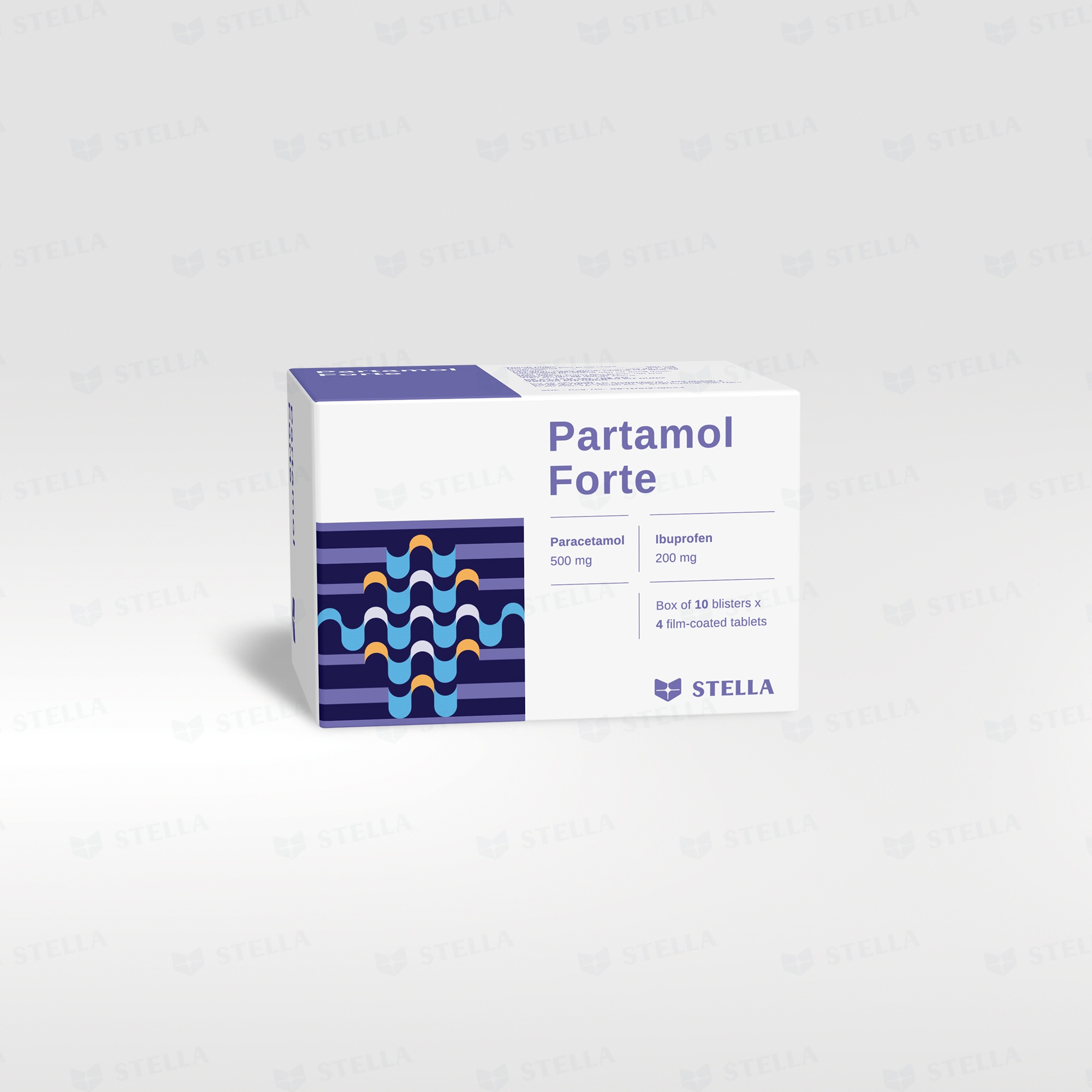
Partamol Forte
OTC

The pharmacological actions of paracetamol and ibuprofen differ in their site and mode of action. These complementary modes of action are synergistic which results in greater antinociception and antipyresis than the single actives alone.

Pack size Box of 12 tablets, 60 tablets, 40 tablets
Shelf-life 24 months
Composition Paracetamol
Ibuprofen
Dosage forms and strengths Film-coated tablet
Paracetamol 500 mg
Ibuprofen 200 mg
Product code :

PRESCRIBING INFORMATION

Indications

  • For the temporary relief of mild to moderate pain associated with migraine, headache, backache, period pain, dental pain, rheumatic and muscular pain, pain of non-serious arthritis, cold and flu symptoms, sore throat and fever.
  • Partamol Forte is especially suitable for pain which requires stronger analgesia than ibuprofen or paracetamol alone.

Dosage

  • Do not take more than six Partamol Forte tablets in any 24 hours period.
  • Adults: Take 1 tablet three times daily, with a 6-hour interval between doses. The dose may be increased to 2 tablets three times daily.
  • In elderly patients, the risk of serious adverse reactions is higher. If the use of this drug is necessary, the lowest effective dose should be used for the shortest possible duration, and gastrointestinal bleeding should be monitored regularly. No special dose adjustment is required.

Administration

  • Partamol Forte is administered orally.
  • For short term-use only.
  • Undesirable effects may be minimised by using the lowest effective dose for the shortest duration necessary to control symptoms.
  • To minimise side effects, it is recommended that patients take Partamol Forte with food.
  • Patients with a known hypersensitivity to any ingredient in the product.
  • Children under 18 years.
  • Concomitant use with other paracetamol-containing products.
  • Patients with a history of hypersensitivity reactions (e.g. bronchospasm, angioedema, asthma, rhinitis, or urticaria) associated with acetylsalicylic acid or other non-steroidal anti-inflammatory drugs (NSAIDs).
  • Patients with active, or a history of recurrent peptic ulcer/haemorrhage (two or more distinct episodes of proven ulceration or bleeding).
  • Patients with a history of, or an existing gastrointestinal ulceration/perforation or bleeding, including that associated with NSAIDs.
  • Patients with defects in coagulation.
  • Patients with severe hepatic failure, severe renal failure or severe heart failure.
  • Concomitant use with other NSAID containing products, including cyclooxygenase-2 (COX-2) specific inhibitors and doses of acetylsalicylic acid above 75 mg daily.
  • Pregnant women.

Possible adverse reactions:

  • Abdominal pain, vomiting, diarrhoea, nausea, dyspepsia and abdominal discomfort.
  • Hyperhidrosis.
  • Alanine aminotransferase increased, gamma-glutamyltransferase increased and liver function tests abnormal with paracetamol. Blood creatinine increased, blood urea increased.
  • Use Partamol Forte at the lowest effective daily dose for the shortest possible duration.
  • Do not self-medicate:
  • For pain relief for more than 10 days in adults;
  • For fever reduction in cases of very high fever (above 39.5°C), fever lasting more than 3 days, or recurrent fever.
  • Caution when using this medication in:
  • Elderly patients and patients with bleeding disorders, hypertension, and impaired renal, hepatic, or cardiac function;
  • Patients with a history of or current asthma, or allergy to NSAIDs leading to bronchospasm;
  • Patients with systemic lupus erythematosus (SLE) and mixed connective tissue disorders may have an increased risk of aseptic meningitis.
  • Gastrointestinal bleeding, ulceration, and perforation, which can be fatal, have been reported at any stage of treatment with NSAIDs, with or without warning symptoms or a history of serious gastrointestinal infections. The use of this medication may reduce fertility in women and is not recommended for women trying to conceive. In women experiencing difficulty conceiving or those undergoing infertility treatment, discontinuation of this medication should be considered.
  • Partamol Forte contains lactose. This medication should not be used in patients with rare hereditary problems of galactose intolerance, total lactase deficiency, or glucose-galactose malabsorption.
  • Adverse effects such as dizziness, drowsiness, fatigue, and visual disturbances may occur after taking the medication. If these symptoms occur, patients should not drive or operate machinery.