PRODUCT FILTER
Categories
Type
Type

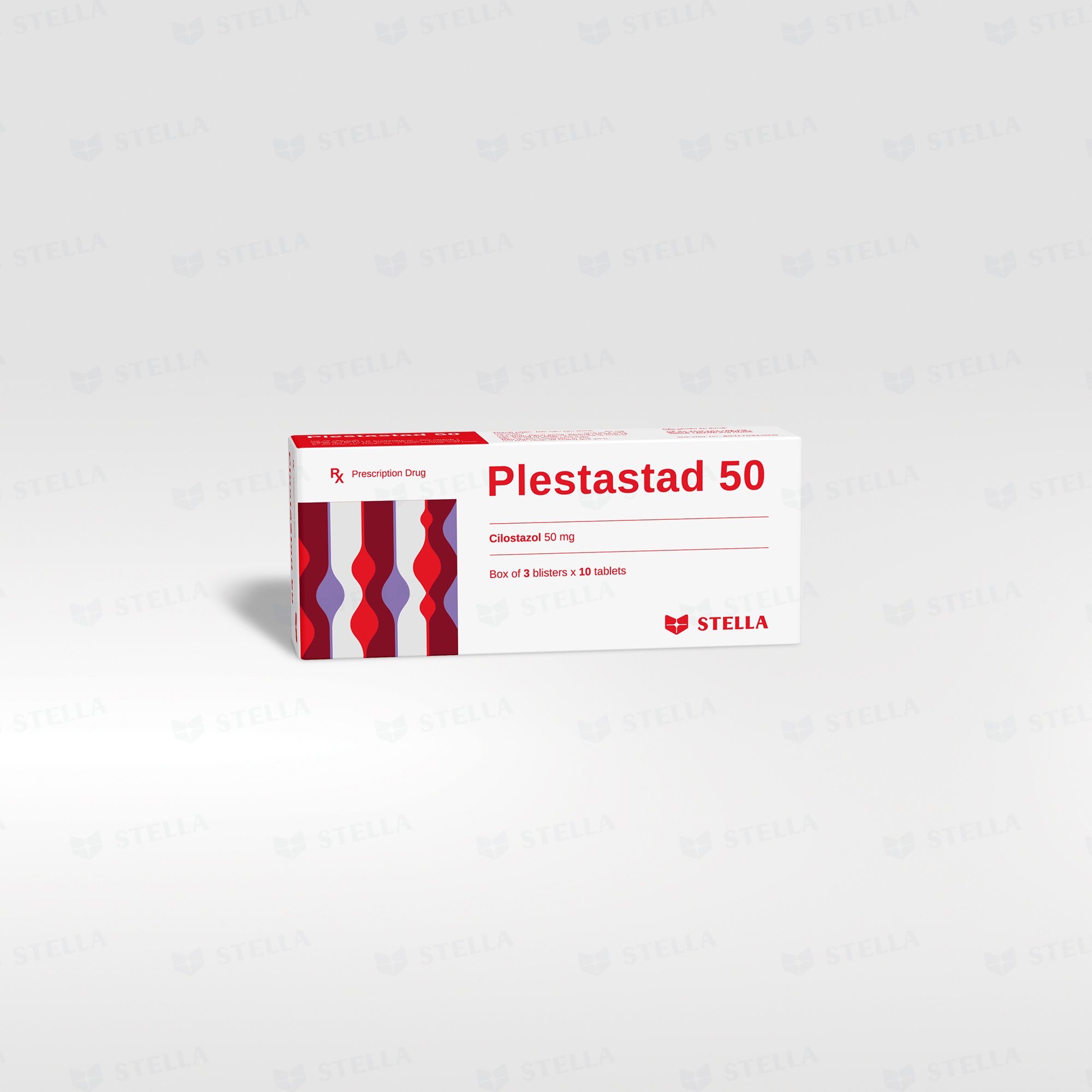
Plestastad 50
Rx

After oral administration, cilostazol is well absorbed through the gastrointestinal tract and reaches steady state after approximately 4 days of continuous use. The average half-life is about 10.5 hours, and it is primarily excreted in the urine.

Pack size Box of 30 tablets, 60 tablets, 100 tablets.
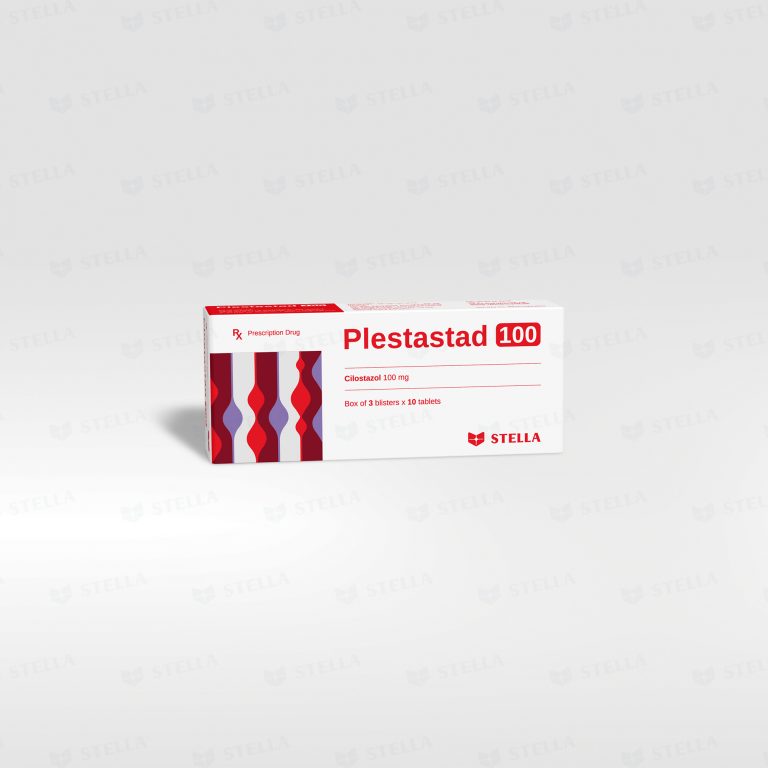
Composition Cilostazol
Dosage forms and strengths Tablet: 50 mg
Product code :

PRESCRIBING INFORMATION

Indications

  • For the improvement of the maximal and pain-free walking distances in patients with intermittent claudication, who do not have rest pain and who do not have evidence of peripheral tissue necrosis.
  • For second-line use, in patients in whom lifestyle modifications (including stopping smoking and [supervised] exercise programs) and other appropriate interventions have failed to sufficiently improve their intermittent claudication symptoms.

Dosage

  • Usual dose: 100 mg twice daily.
  • Evaluate effectiveness after approximately 3 months of treatment and consider discontinuing the medication if symptoms do not improve.
  • Reduce the dose to 50 mg twice daily when used concurrently with strong CYP3A4 or CYP2C19 inhibitors (Erythromycin, Clarithromycin, Ketoconazole, Itraconazole, omeprazole…).
  • No dose adjustment is needed in elderly patients or patients with mild to moderate renal impairment or mild hepatic impairment.
  • Do not use this medication in patients with moderate or severe hepatic impairment.

Administration

  • Plestastad 50 should be taken orally 30 minutes before breakfast and the evening meal.
  • Hypersensitivity to cilostazol or any of the drugs.
  • Severe renal impairment, moderate or severe hepatic impairment, congestive heart failure.
  • Pregnant women.
  • Children.
  • Individuals at high risk of bleeding or currently bleeding.
  • History of severe tachycardia, ventricular arrhythmias, ventricular fibrillation, or multiple ventricular premature beats or prolonged QT interval.
  • Unstable angina, myocardial infarction, or coronary intervention within the last 6 months.
  • Concurrent use of two or more anticoagulants or antiplatelet drugs.

Possible adverse reactions

  • Bruising, angioedema (peripheral, facial), loss of appetite;
  • Headache, dizziness;
  • Palamy-pale, tachycardia, angina pectoris, arrhythmias, ventricular premature beats;
  • Rhinitis, pharyngitis;
  • Diarrhea, abnormal stools.
  • Carefully consider the appropriateness of cilostazol treatment alongside other treatment options such as revascularization.
  • Cilostazol may cause tachycardia, palpitations, arrhythmias, and/or hypotension. Patients at increased risk of serious cardiac adverse events due to increased heart rate, such as those with stable coronary artery disease, should be closely monitored during cilostazol treatment. It is contraindicated in patients with unstable angina or myocardial infarction/coronary intervention within the past 6 months, or a history of severe tachycardia.
  • Caution should be exercised when prescribing cilostazol to patients with atrial or ventricular premature beats and patients with atrial fibrillation or flutter.
  • Patients should report any signs of bleeding or easy bruising, or hematological disorders such as fever and sore throat during treatment.
  • Cilostazol should be discontinued in the event of retinal hemorrhage.
  • Cilostazol may increase the risk of bleeding during surgery (including minor procedures such as tooth extraction). If the patient is undergoing elective surgery and the antiplatelet effect is not necessary, cilostazol should be discontinued 5 days before surgery.
  • Rare or very rare reports of hematological abnormalities have been observed, including thrombocytopenia, leukopenia, agranulocytosis, pancytopenia, and aplastic anemia.
  • Discontinue cilostazol if there is evidence of hematological abnormalities.
  • In patients taking strong CYP3A4 or CYP2C19 inhibitors, plasma cilostazol concentrations may increase. In these cases, a cilostazol dose of 50 mg twice daily is recommended.
  • Caution should be exercised when using cilostazol concurrently with any other drugs that may lower blood pressure or inhibit platelet aggregation.
  • Cilistazol should not be used during pregnancy or breastfeeding.
  • Cilostazol may cause dizziness, and patients should be warned to exercise caution before driving or operating machinery.