PRODUCT FILTER
Categories
Type
Type

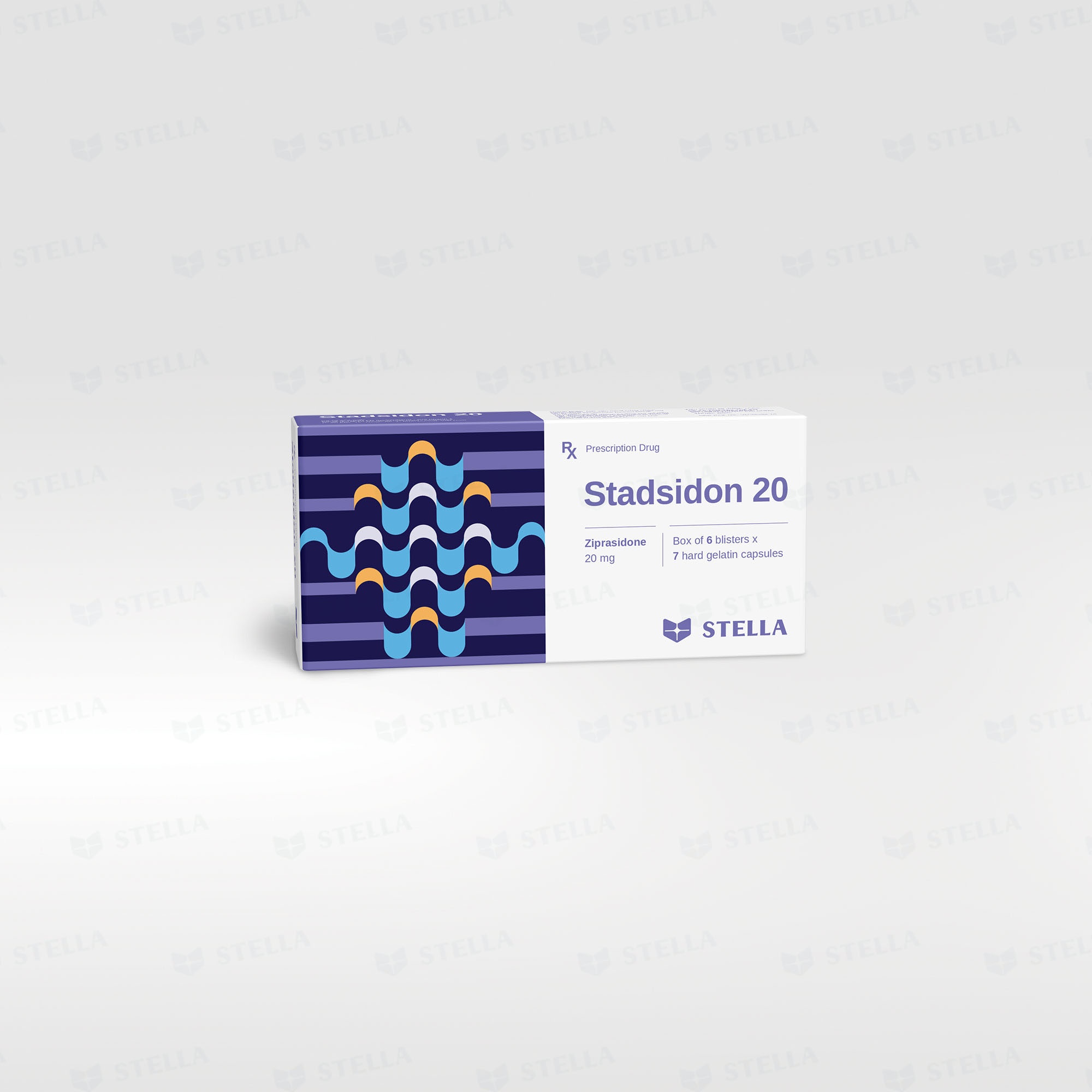
Stadsidon 20
Rx

Stadsidon 20 contains ziprasidone that is an antipsychotics belonging to indole derivatives. Stadsidon 20 is indicated in treatment of bipolar I disorder, treatment of schizophrenia and acute treatment of agitation in schizophrenia. Ziprasidone is well absorbed after oral administration, the absorption of ziprasidone is increased up to two-fold in the presence of food.

Pack size Box of 28 capsules, 42 capsules
Shelf-life 24 months
Composition Ziprasidone
Dosage forms and strengths Hard-gelatin capsule: 20 mg
Product code :

PRESCRIBING INFORMATION

Indications

  •  Schizophrenia,
  • Bipolar I disorder,
  • Acute treatment of agitation in schizophrenia.

Dosage

Adults:

  • Schizophrenia:
    An initial oral dose equivalent to 20 mg twice daily with food.
    Doses may be increased if necessary at intervals of not less than 2 days up to 80 mg twice daily.
    For maintenance, doses as low as 20 mg twice daily may be effective.
  • Bipolar I disorder:
    An initial oral dose equivalent to 40 mg twice daily with food.
    The dose should be increased to 60 or 80 mg twice daily on the second day of treatment and subsequently adjusted according to tolerance.
    Patient should be continued on the same dose on which they were stabilized, within a range of 40 to 80 mg twice daily.
  • Acute treatment of agitation in schizophrenia: If long-term therapy is indicated, oral ziprasidone hydrochloride capsules, up to 80 mg twice daily, should replace the intramuscular administration.

Pediatric

  • Safety and efficacy of ziprasidone have not been established in children younger than 18 years of age.

Geriatric

  • No clinically important differences in pharmacokinetics, were observed between geriatric and younger adults.

Hepatic and renal impairment

  • Dosage adjustment is not necessary.

Usage

  • Orally administered.
  • Known hypersensitivity to any of the ingredient.
  • Ziprasidone is contraindicated in patients with known history of QT interval prolongation with recent acute myocardial infarction or with uncompensated heart failure.
  • Ziprasidone should not be given with: Dofetilide, sotalol, quinidine, other Class Ia and III anti-arrhythmics, mesoridazine, thioridazine, chlorpromazine, droperidol, pimozide, sparfloxacin, gatifloxacin, moxifloxacin, halofantrine, mefloquine, pentamidine, arsenic trioxide, levomethadyl acetate, dolasetron mesylate, probucol or tacrolimus.

Common

  • Abdominal pain, flu syndrome, fever, accidental fall, face edema, chills, photosensitivity reaction, flank pain, hypothermia, motor vehicle accident.
  • Tachycardia, hypertension, postural hypotension.
  • Anorexia, vomiting.
  • Myalgia.
  • Agitation, extrapyramidal syndrome, tremor, dystonia, hypertonia, dyskinesia, hostility, twitching, paresthesia, confusion, vertigo, hypokinesia, hyperkinesia, abnormal gait, oculogyric crisis, amnesia, cogwheel rigidity, delirium, hypotonia, dysarthria, buccoglossal syndrome, choreoathetosis, diplopia, incoordination, neuropathy.
  • Dyspnea.
  • Fungal dermatitis
  • Use caution when administering Stadsidon 20 to patients with difficulty swallowing due to the risk of aspiration pneumonia.
  • Discontinue treatment with Stadsidon 20 in the following cases:
    Immediately discontinue the medication and initiate intensive treatment if neuroleptic malignant syndrome (NMS) occurs.
    Suspected eosinophilic reaction and systemic symptoms (DRESS) appear: Skin reactions (rash or exfoliative dermatitis); eosinophilic reaction, fever, lymphadenitis, and one or more systemic complications such as hepatitis, nephritis, pneumonia, myocarditis, and pericarditis.
    Suspected serious skin reaction such as Stevens-Johnson syndrome.
  • Additionally, note:
    Ziprasidone is not approved for the treatment of mental disorders related to memory impairment.
    Ziprasidone should not be combined with drugs that prolong the QT interval.
    Tardive dyskinesia.
    Hyperglycemia and diabetes mellitus.
    Rash.
    Orthostatic hypotension and related symptoms such as dizziness, tachycardia, and fainting in some patients.
    Increased prolactin.
    Reduced motor activity and cognitive impairment (drowsiness).
    Patients with mental illness or bipolar disorder have suicidal tendencies; this risk is higher in patients treated with this medication, therefore close monitoring is necessary.
  • Stadsidone 20 should only be used in pregnant women when the therapeutic benefits outweigh the risks to the fetus. Breastfeeding should be discontinued while using ziprasidone.
  • Stadsidone 20 may cause drowsiness that affects the ability to drive and operate machinery. Patients wishing to drive or operate machinery should exercise extreme caution.
