PRODUCT FILTER
Categories
Type
Type

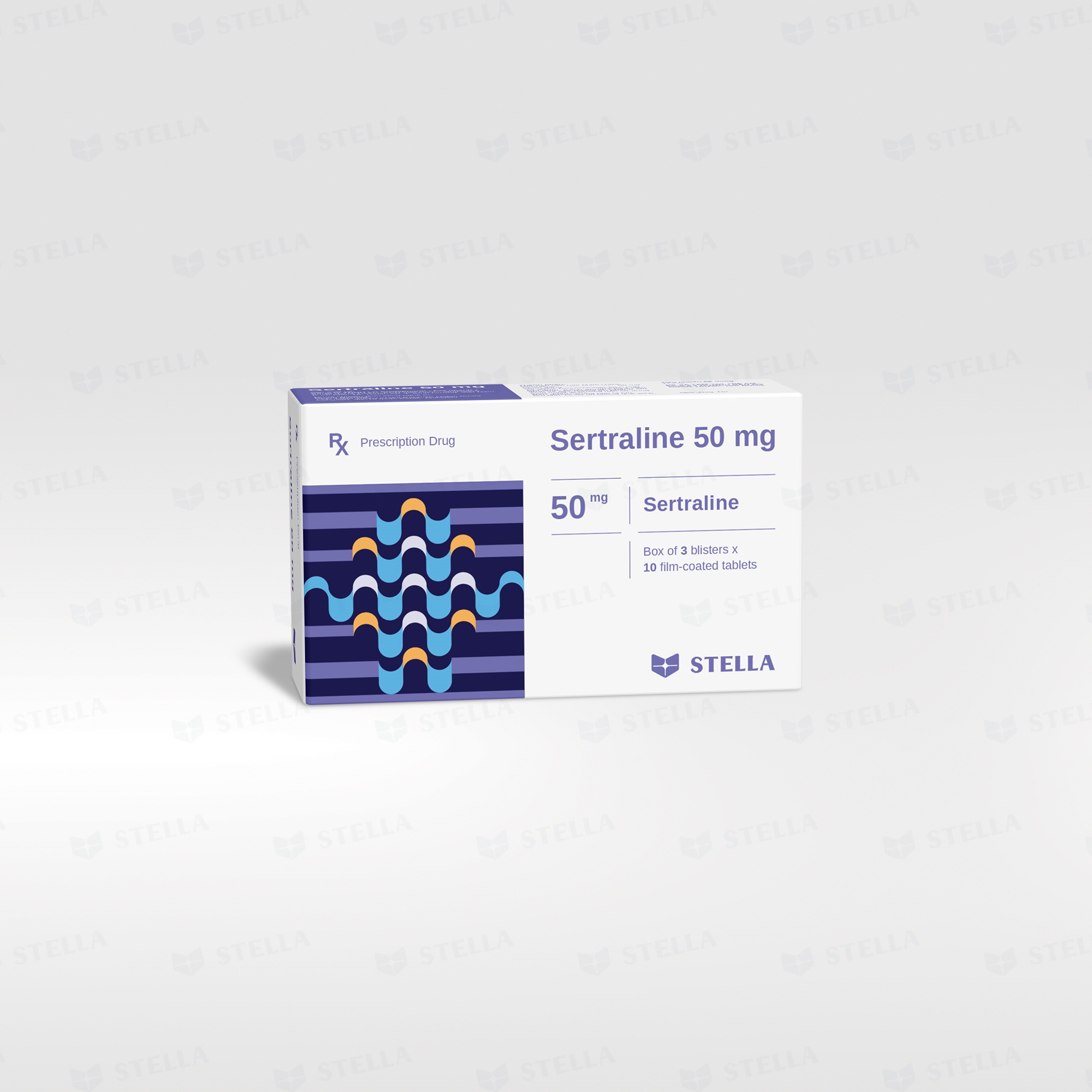
Sertraline 50 mg
Rx

Sertraline reaches peak plasma concentrations after 4.5–8.4 hours. 98% of the drug is bound to plasma proteins. Food does not significantly affect the bioavailability of sertraline.

Pack size Box of 30 tablets
Shelf-life 36 months
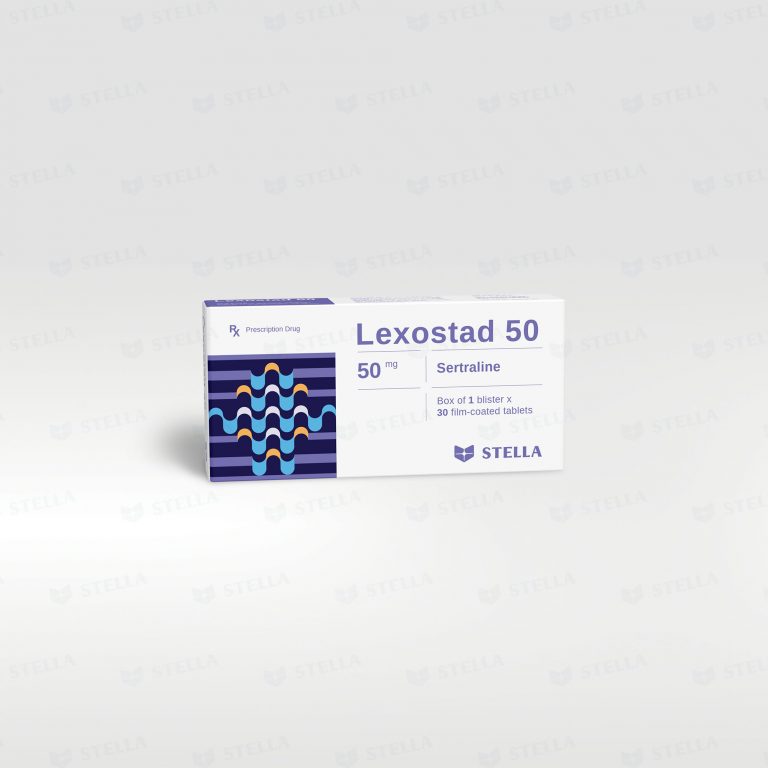
Composition Sertraline
Dosage forms and strengths Film-coated tablet: 50 mg
Product code :

PRESCRIBING INFORMATION

Indications

For the treatment of:

  • Major depressive episodes.
  • Panic disorder, with or without agoraphobia.
  • Obsessive compulsive disorder in adults and paediatric patients aged 6 – 17 years.
  • Social anxiety disorder.
  • Post traumatic stress disorder.

Dosage

Adults

  • Depression, Obsessive compulsive disorder:
    Initial dose 50 mg once daily. After at least one week, if there is no clinical response, the dose may be increased in increments of 50 mg up to a maximum dose of 200 mg/day.
    Each course of treatment lasts several months (usually about 6 months) to prevent the risk of relapse in depressed patients.
  • Panic Disorder, Post-Traumatic Stress Disorder, Social Anxiety Disorder:
    Initial dose 25 mg once daily. After one week, if there is no improvement, increase the dose by 25 mg daily.
    Dosage changes should not be made more than once a week due to the 24-hour half-life of sertraline. The drug begins to take effect within 7 days. However, a longer period is usually needed to achieve a clear therapeutic response.

Children with obsessive-compulsive disorder

  • 13 years and older: Initial dose of 50 mg once daily. If there is no improvement after at least one week, increase the dose by 50 mg daily up to a maximum dose of 200 mg/day. Dose changes should not be made at intervals of less than one week.
  • 6-12 years: Initial dose of 25 mg once daily. If there is no improvement after at least one week, increase the dose by 25 mg daily up to a maximum dose of 200 mg/day. Dose changes should not be made at intervals of less than one week.
  • Children under 6 years should not use this drug.

Others

  • Caution should be exercised in administering sertraline due to the increased risk of hyponatremia in the elderly.
  • No dose adjustment is necessary for patients with impaired renal function.
  • A lower starting dose and fewer doses should be used for patients with impaired hepatic function.

Administration

  • Sertraline should be orally administered once daily, either in the morning or evening with or without food.
  • Hypersensitivity to sertraline or to any of the excipients.
  • Concomitant treatment with irreversible monoamine oxidase inhibitors (MAOIs) is contraindicated due to the risk of serotonin syndrome with symptoms such as agitation, tremor and hyperthermia. Sertraline must not be initiated for at least 14 days after discontinuation of treatment with an irreversible MAOI. Sertraline must be discontinued for at least 7 days before starting treatment with an irreversible MAOI.
  • Concomitant intake of pimozide is contraindicated.
  • Patients with severe liver impairment.

Possible adverse reactions:

  • Insomnia.
  • Dizziness, somnolence, headache.
  • Diarrhoea, nausea, dry mouth.
  • Ejaculation failure.
  • Fatigue.
  • Upper respiratory tract infection, pharyngitis, rhinitis.
  • Decreased appetite, increased appetite.
  • Depression, depersonalisation, nightmare, anxiety, agitation, nervousness, libido decreased, bruxism.
  • Tremor, movement disorders (including extrapyramidal symptoms such as hyperkinesia, hypertonia, dystonia, teeth grinding or gait abnormalities), paraesthesia, hypertonia, disturbance in attention, dysgeusia.
  • Visual disturbance.
  • Tinnitus.
  • Palpitations.
  • Hot flush.
  • Yawning.
  • Abdominal pain, vomiting, constipation, dyspepsia, flatulence.
  • Rash, hyperhidrosis.
  • Back pain, arthralgia, myalgia.
  • Menstruation irregular, erectile dysfunction.
  • Chest pain, malaise, asthenia, pyrexia.
  • Weight increased.
  • Syndromes like serotonin syndrome (SS) or neuroleptic malignant syndrome (NMS) has been reported with treatment with sertraline.
  • Care should be exercised when switching from selective serotonin reuptake inhibitors (SSRIs), antidepressants or anti-obsessional drugs.
  • Co-administration of sertraline with other drugs which enhance the effects of serotonergic neurotransmission such as tryptophan or fenfluramine or 5-HT agonists, or the herbal medicine, St John’s Wort (hypericum perforatum), should be avoided.
  • Sertraline should be used with caution in patients with risk factors for QTc prolongation.
  • Manic/hypomanic symptoms have been reported to emerge in a small proportion of patients treated with sertraline. Therefore sertraline should be used with caution in patients with a history of mania/hypomania.
  • Seizures may occur with sertraline therapy: sertraline should be avoided in patients with unstable epilepsy and patients with controlled epilepsy should be carefully monitored. Sertraline should be discontinued in any patient who develops seizures.
  • Worsening depression and/or suicidal ideation and unusual behavior may occur in both adults and children with depression or other mental illnesses, whether or not they are receiving antidepressants. All patients receiving antidepressants for any indication should be closely monitored for clinical deterioration, suicidal ideation, and unusual behavioral changes.
  • Sertraline should not be used in the treatment of children and adolescents under the age of 18 years, except for patients with obsessive compulsive disorder aged 6 – 17 years old.
  • Hyponatraemia may occur.
  • Sertraline should not be used in pregnant women unless the benefits to the mother’s clinical condition outweigh the potential risks.
  • It is recommended that sertraline not be used in breastfeeding mothers unless a physician assesses that the benefits outweigh the potential risks.
  • As psychotropic drugs may impair the mental or physical abilities required for the performance of potentially hazardous tasks such as driving a car or operating machinery, the patient should be cautioned accordingly.