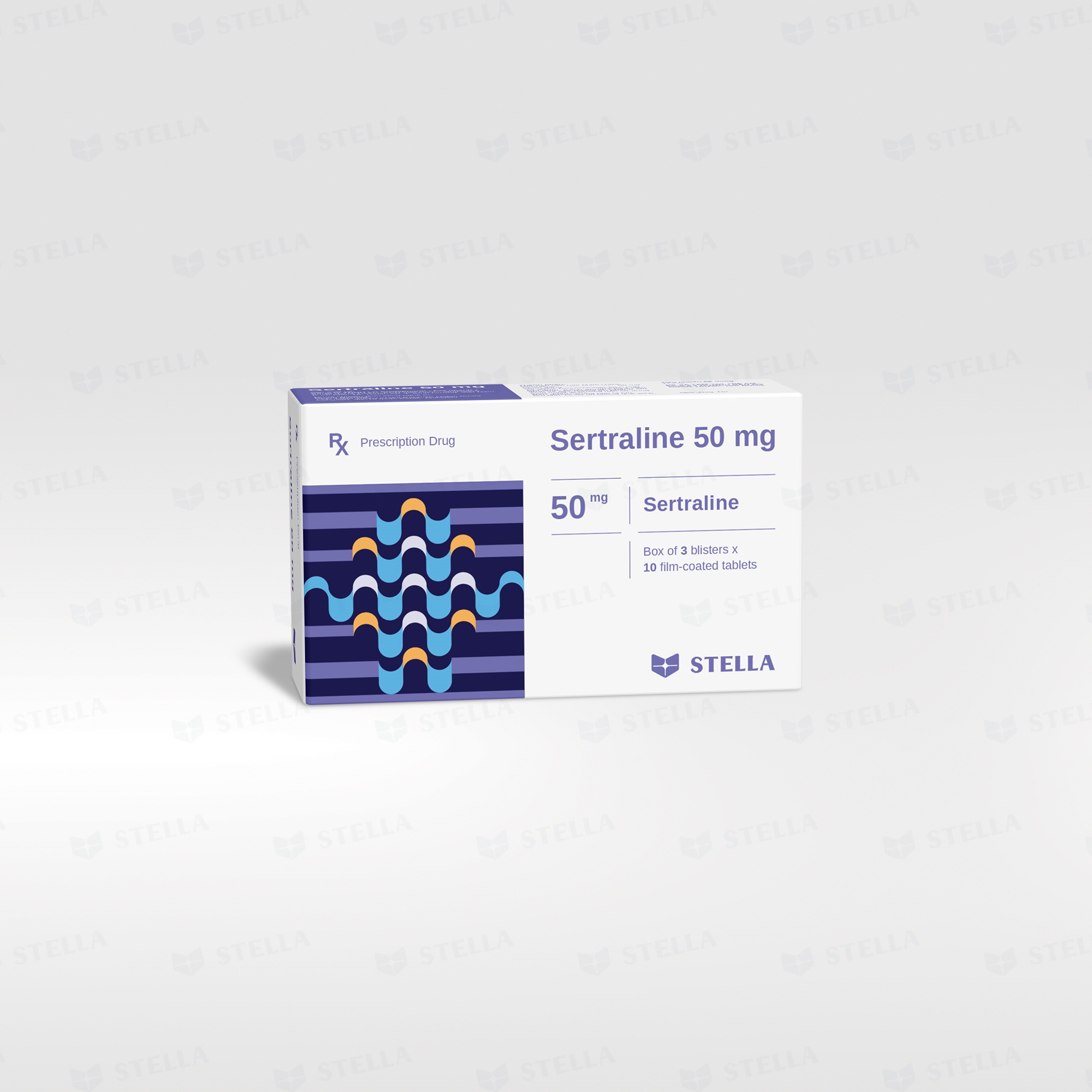
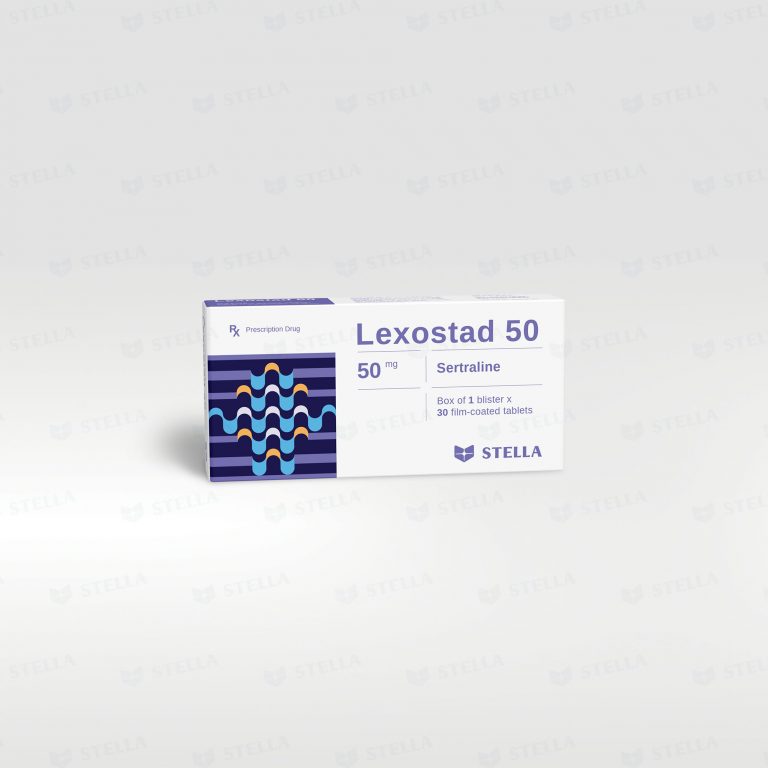
Indications
For the treatment of:
- Major depressive episodes.
- Panic disorder, with or without agoraphobia.
- Obsessive compulsive disorder in adults and paediatric patients aged 6 – 17 years.
- Social anxiety disorder.
- Post traumatic stress disorder.
Dosage
Adults
- Depression, Obsessive compulsive disorder:
Initial dose 50 mg once daily. After at least one week, if there is no clinical response, the dose may be increased in increments of 50 mg up to a maximum dose of 200 mg/day.
Each course of treatment lasts several months (usually about 6 months) to prevent the risk of relapse in depressed patients.
- Panic Disorder, Post-Traumatic Stress Disorder, Social Anxiety Disorder:
Initial dose 25 mg once daily. After one week, if there is no improvement, increase the dose by 25 mg daily.
Dosage changes should not be made more than once a week due to the 24-hour half-life of sertraline. The drug begins to take effect within 7 days. However, a longer period is usually needed to achieve a clear therapeutic response.
Children with obsessive-compulsive disorder
- 13 years and older: Initial dose of 50 mg once daily. If there is no improvement after at least one week, increase the dose by 50 mg daily up to a maximum dose of 200 mg/day. Dose changes should not be made at intervals of less than one week.
- 6-12 years: Initial dose of 25 mg once daily. If there is no improvement after at least one week, increase the dose by 25 mg daily up to a maximum dose of 200 mg/day. Dose changes should not be made at intervals of less than one week.
- Children under 6 years should not use this drug.
Others
- Caution should be exercised in administering sertraline due to the increased risk of hyponatremia in the elderly.
- No dose adjustment is necessary for patients with impaired renal function.
- A lower starting dose and fewer doses should be used for patients with impaired hepatic function.
Administration
- Sertraline should be orally administered once daily, either in the morning or evening with or without food.