PRODUCT FILTER
Categories
Type
Type

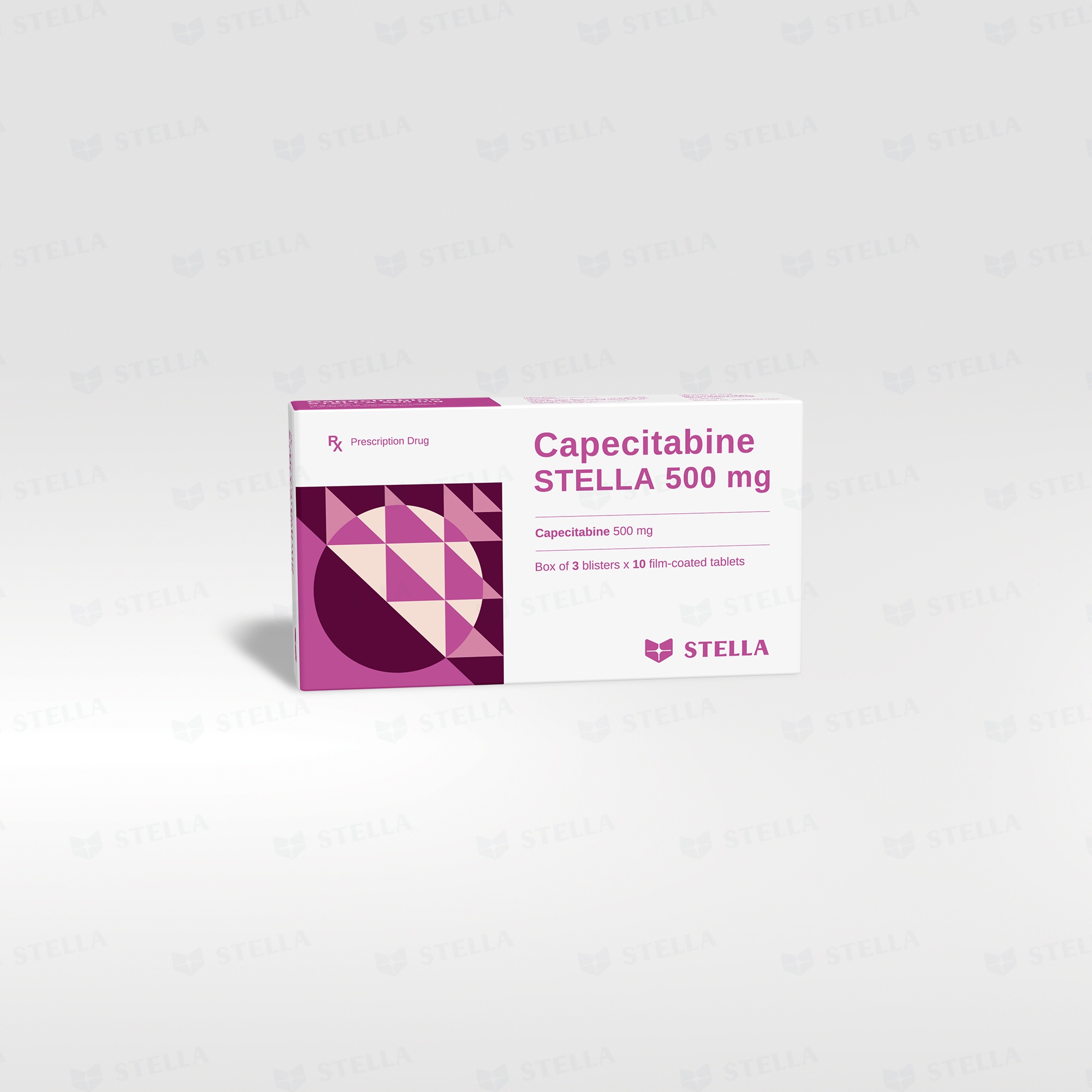
Capecitabine STELLA 500 mg
Rx

Capecitabine is a fluoropyrimidine carbamate derivative that was designed as an orally administered, tumour-activated and tumour-selective cytotoxic agent.

Pack size Box of 30 tablets, 60 tablets, 120 tablets
Shelf-life 24 tháng
Composition Capecitabine
Dosage forms and strengths Film-coated tablet: 500 mg
Product code :

PRESCRIBING INFORMATION

Indications

  • Breast cancer:
    For the treatment of patients with locally advanced or metastatic breast cancer after failure of cytotoxic chemotherapy.
  • Colon, colorectal cancer:
    For the adjuvant treatment of patients following surgery of stage III (Dukes’ stage C) colon cancer, patients with metastatic colorectal cancer.
  • Gastric cancer:
    For the first-line treatment of patients with advanced gastric cancer in combination with a platinum-based regimen.

Dosage
Monotherapy
Colorectal and breast cancer

  • Given as monotherapy, the recommended starting dose for capecitabine is 1250 mg/ m2 administered twice daily (morning and evening; equivalent to 2500 mg/m2 total daily dose) for 14 days followed by a 7-day rest period.

Combination therapy

Breast cancer

  • In combination with docetaxel, the recommended starting dose of capecitabine in the treatment of metastatic breast cancer is 1250 mg/m2 twice daily for 14 days followed by a 7- day rest period, combined with docetaxel at 75 mg/m2 as a 1 hour intravenous infusion every 3 weeks. Premedication with an oral corticosteroid such as dexamethasone according to the docetaxel summary of product characteristics should be started prior to docetaxel administration for patients receiving the capecitabine plus docetaxel combination.

Colon, colorectal and gastric cancer

  • In combination treatment, the recommended starting dose of capecitabine should be reduced to 800 – 1000 mg/mwhen administered twice daily for 14 days followed by a 7-day rest period, or to 625 mg/mtwice daily when administered continuously. For combination with irinotecan, the recommended starting dose is 800 mg/mwhen administered twice daily for 14 days followed by a 7-day rest period combined with irinotecan 200 mg/m2 on day 1. The inclusion of bevacizumab in a combination regimen has no effect on the starting dose of capecitabine.
  • Premedication to maintain adequate hydration and anti-emesis according to the cisplatin summary of product characteristics should be started prior to cisplatin administration for patients receiving the capecitabine plus cisplatin combination. Premedication with antiemetics according to the oxaliplatin summary of product characteristics is recommended for patients receiving the capecitabine plus oxaliplatin combination. Adjuvant treatment in patients with stage III colon cancer is recommended for a duration of 6 months.
  • Treatment should be discontinued if progressive disease or intolerable toxicity is observed. The capecitabine dose is calculated according to body surface area.

Posology adjustments during treatment

General

  • Toxicity due to capecitabine administration may be managed by symptomatic treatment and/or modification of the dose (treatment interruption or dose reduction). Once the dose has been reduced, it should not be increased at a later time.
  • For those toxicities considered by the treating physician to be unlikely to become serious or life-threatening, e.g. alopecia, altered taste, nail changes, treatment can be continued at the same dose without reduction or interruption.
    (Read more information in the package insert).

Administration

  • Swallowed whole with water within 30 minutes after a meal.
  • Hypersensitivity to capecitabine or to any of the excipients.
  • In patients who have a history of severe and unexpected reactions to fluoropyrimidine therapy or with known hypersensitivity to fluorouracil.
  • Known complete DPD (dihydropyrimidine dehydrogenase) deficiency.
  • During pregnancy and lactation.
  • In patients with severe leukopenia, neutropenia, or thrombocytopenia.
  • Treatment with sorivudine or its chemically related analogues, such as brivudine.
  • In patients with severe hepatic impairment (Child Pugh C).
  • In patients with severe renal impairment (creatinine clearance below 30 ml/min).
  • If contraindications exist to any of the medicinal products in the combination regimen, that medicinal product should not be used

Monotherapy

Very common

  • Anorexia.
  • Diarrhoea, vomiting, nausea, stomatitis, abdominal pain.
  • Palmar-planta rerythrodysaesthesia syndrome.
  • Fatigue, asthenia.

Common

  • Herpes viral infection, nasopharyngitis, lower respiratory tract infection.
  • Neutropenia, anaemia.
  • Dehydration, weight decreased.
  • Insomnia, depression.
  • Headache, lethargy, dizziness, parasthesia, dysgeusia.
  • Lacrimation increased, conjunctivitis, eye irritation.
  • Thrombophlebitis.
  • Dyspnoea, epistaxis, cough, rhinorrhoea.
  • Hyperbilirubinemia, liver function test abnormalities.
  • Rash, alopecia, erythema, dry skin, pruritus, skin hyperpigmentation, rash macular, skin desquamation, dermatitis, pigmentation disorder, nail disorder.
  • Pain in extremity, back pain, arthralgia.
  • Pyrexia, oedema peripheral, malaise, chest pain.

Combination therapy
Very common

  • Neutropenia, leucopenia, anaemia, neutropenic fever, thrombocytopenia.
  • Appetite decreased.
  • Paraesthesia, dysaesthesia, peripheral neuropathy, peripheral sensory neuropathy, dysgeusia, headache.
  • Lacrimation increased.
  • Lower limb oedema, hypertension, embolism and thrombosis.
  • Sore throat, dysaesthesia pharynx.
  • Constipation, dyspepsia
  • Alopecia, nail disorder.
  • Myalgia, arthralgia, pain in extremity.

Common

  • Herpes zoster, urinary tract infection, oral candidiasis, upper respiratory tract infection, rhinitis, influenza, infection, oral herpes.
  • Bone marrow depression, febrile, neutropenia.
  • Hypokalaemia, hyponatraemia, hypomagnesaemia, hypocalcaemia, hyperglycaemia.
  • Sleep disorder, anxiety.
  • Neurotoxicity, tremor, neuralgia, hypersensitivity reaction, hypoaesthesia.
  • Visual disorders, dry eye, eye pain, visual impairment, vision blurred.
  • Tinnitus, hypoacusis.
  • Atrial fibrillation, cardiac ischaemia, cardiac infarction.
  • Flushing, hypotension, hypertensive crisis, hot flush, phlebitis.
  • Hiccups, pharyngolaryngeal pain, dysphonia.
  • Upper gastrointestinal haemorrhage, mouth ulceration, gastritis, abdominal distension, gastroesophageal reflux disease, oral pain, dysphagia, rectal haemorrhage, abdominal pain lower, oral dysaesthesia, paraesthesia oral, hypoaesthesia oral, abdominal discomfort.
  • Hepatic function abnormal.
  • Hyperhidrosis, rash, erythematous, urticaria, night sweats.
  • Pain in jaw, muscle spasms, trismus, muscular weakness.
  • Haematuria, proteinuria, creatinine renal clearance decreased, dysuria.
  • Dose limiting toxicities include: Diarrhoea, abdominal pain, nausea, stomatitis and hand-foot syndrome (hand-foot skin reaction, palmar-plantar erythrodysesthesia). Most adverse reactions are reversible and do not require permanent discontinuation of therapy, although doses may need to be withheld or reduced.
  • Capecitabine can induce diarrhoea, which can sometimes be severe. Patients with severe diarrhoea should be carefully monitored and given fluid and electrolyte replacement if they become dehydrated. Standard antidiarrhoeal treatments (e.g. loperamide) may be used as soon as possible. NCIC CTC grade 2 diarrhoea is defined as an increase of 4 to 6 stools/day or nocturnal stools, grade 3 diarrhoea as an increase of 7 to 9 stools/day or incontinence and malabsorption. Grade 4 diarrhoea is an increase of ≥ 10 stools/day or grossly bloody diarrhoea or the need for parenteral support. Dose reduction should be applied as necessary.
  • Dehydration should be prevented or corrected at the onset. Patients with anorexia, asthenia, nausea, vomiting or diarrhoea may rapidly become dehydrated.
    Dehydration may cause acute renal failure, especially in patients with pre-existing compromised renal function or when capecitabine is given concomitantly with known nephrotoxic agents. Fatal outcome of renal failure has been reported in these situations.
    If grade 2 (or higher) dehydration occurs, capecitabine treatment should be immediately interrupted and the dehydration corrected. Treatment should not be restarted until the patient is rehydrated and any precipitating causes have been corrected or controlled. Dose modifications applied should be applied for the precipitating adverse event as necessary.
  • Dihydropyrimidine dehydrogenase (DPD) deficiency. DPD activity is rate limiting in the catabolism of 5-fluorouracil. Patients with DPD deficiency are therefore at increased risk of fluoropyrimidines-related toxicity, including for example stomatitis, diarrhoea, mucosal inflammation, neutropenia and neurotoxicity.
    DPD-deficiency related toxicity usually occurs during the first cycle of treatment or after dose increase.
    Complete DPD deficiency is rare (0.01 – 0.5% of Caucasians). Patients with complete DPD deficiency are at high risk of life-threatening or fatal toxicity and must not be treated with capecitabine.
    Partial DPD deficiency is estimated to affect 3 – 9% of the Caucasian population. Patients with partial DPD deficiency are at increased risk of severe and potentially life-threatening toxicity. A reduced starting dose should be considered to limit this toxicity. DPD deficiency should be considered as a parameter to be taken into account in conjunction with other routine measures for dose reduction. Initial dose reduction may impact the efficacy of treatment. In the absence of serious toxicity, subsequent doses may be increased with careful monitoring.
    Testing for DPD deficiency
    Phenotype and/or genotype testing prior to the initiation of treatment with capecitabine is recommended despite uncertainties regarding optimal pre-treatment testing methodologies. Consideration should be given to applicable clinical guidelines.
  • Cardiotoxicity has been associated with fluoropyrimidine therapy, including myocardial infarction, angina, dysrhythmias, cardiogenic shock, sudden death and electrocardiographic changes (including very rare cases of QT prolongation). These adverse reactions may be more common in patients with a prior history of coronary artery disease. Cardiac arrhythmias (including ventricular fibrillation, torsade de pointes, and bradycardia), angina pectoris, myocardial infarction, heart failure and cardiomyopathy have been reported in patients receiving capecitabine. Caution must be exercised in patients with history of significant cardiac disease, arrhythmias and angina pectoris.
  • Hand-foot syndrome (also known as hand-foot skin reaction or palmar-plantar erythrodysesthesia or chemotherapy induced acral erythema). Grade 1 hand-foot syndrome is defined as numbness, dysesthesia/paresthesia, tingling, painless swelling or erythema of the hands and/or feet and/or discomfort which does not disrupt the patient’s normal activities. Grade 2 hand-foot syndrome is painful erythema and swelling of the hands and/or feet and/or discomfort affecting the patient’s activities of daily living. Grade 3 hand-foot syndrome is moist desquamation, ulceration, blistering and severe pain of the hands and/or feet and/or severe discomfort that causes the patient to be unable to work or perform activities of daily living. Persistent or severe hand-foot syndrome (grade 2 and above) can eventually lead to loss of fingerprints which could impact patient identification. If grade 2 or 3 hand-foot syndrome occurs, administration of capecitabine should be interrupted until the event resolves or decreases in intensity to grade 1. Following grade 3 hand-foot syndrome, subsequent doses of capecitabine should be decreased. When capecitabine and cisplatin are used in combination, the use of vitamin B6 (pyridoxine) is not advised for symptomatic or secondary prophylactic treatment of hand-foot syndrome, because of published reports that it may decrease the efficacy of cisplatin. There is some evidence that dexpanthenol is effective for hand-foot syndrome prophylaxis in patients treated with capecitabine.
  • Brivudine must not be administered concomitantly with capecitabine. Fatal cases have been reported following this drug interaction. There must be at least a 4-week waiting period between end of treatment with brivudine and start of capecitabine therapy. Treatment with brivudine can be started 24 hours after the last dose of capecitabine. In the event of accidental administration of brivudine to patients being treated with capecitabine, effective measures should be taken to reduce the toxicity of capecitabine. Immediate admission to hospital is recommended. All measures should be initiated to prevent systemic infections and dehydration.
  • In the absence of safety and efficacy data in patients with hepatic impairment, capecitabine use should be carefully monitored in patients with mild to moderate liver dysfunction, regardless of the presence or absence of liver metastasis. Administration of capecitabine should be interrupted if treatment-related elevations in bilirubin of > 3.0 x ULN or treatment-related elevations in hepatic aminotransferases (ALT, AST) of > 2.5 x ULN occur. Treatment with capecitabine monotherapy may be resumed when bilirubin decreases to ≤ 3.0 x ULN or hepatic aminotransferases decrease to ≤ 2.5 x ULN.
  • The incidence of grade 3 or 4 adverse reactions in patients with moderate renal impairment (creatinine clearance 30 – 50 ml/min) is increased compared to the overall population.
  • In an interaction study with single-dose warfarin administration, there was a significant increase in the mean AUC (+57%) of S-warfarin. These results suggest an interaction, probably due to an inhibition of the cytochrome P450 2C9 isoenzyme system by capecitabine. Patients receiving concomitant capecitabine and oral coumarin-derivative anticoagulant therapy should have their anticoagulant response (INR or prothrombin time) monitored closely and the anticoagulant dose adjusted accordingly.
  • Hypo- or hypercalcaemia has been reported during capecitabine treatment. Caution must be exercised in patients with pre-existing hypo- or hypercalcaemia.
  • Caution must be exercised in patients with central or peripheral nervous system disease, e.g. brain metastasis or neuropathy.
  • Caution must be exercised in patients with diabetes mellitus or electrolyte disturbances, as these may be aggravated during capecitabine treatment.
  • Patients should be carefully monitored for ophthalmological complications such as keratitis and corneal disorders, especially if they have a prior history of eye disorders. Treatment of eye disorders should be initiated as clinically appropriate.
  • Capecitabine may cause severe skin reactions such as Stevens-Johnson syndrome and toxic epidermal necrolysis. Capecitabine treatment should be permanently discontinued in patients who experience a severe skin reaction during treatment.
  • Capecitabine tablets should not be crushed or cut. In case of exposure of either patient or caregiver to crushed or cut capecitabine tablets adverse drug reactions could occur.
  • This medicine contains less than 1 mmol sodium (23 mg) per tablet, that is to say essentially ‘sodium-free’.
  • This medicine contains lactose. Patients with rare hereditary problems of galactose intolerance, total lactase deficiency or glucose-galactose malabsorption should not take this medicine.
  • Capecitabine is contraindicated during pregnancy. Breast-feeding should be discontinued while receiving treatment with capecitabine and for 2 weeks after the final dose.
  • Capecitabine has minor or moderate influence on the ability to drive and use machines. Capecitabine may cause dizziness, fatigue and nausea.