PRODUCT FILTER
Categories
Type
Type

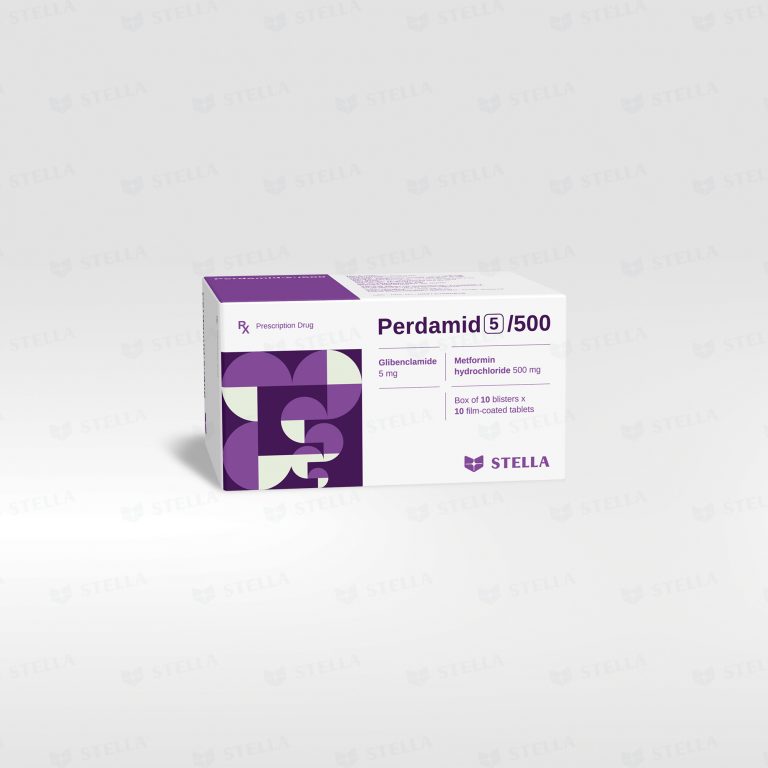
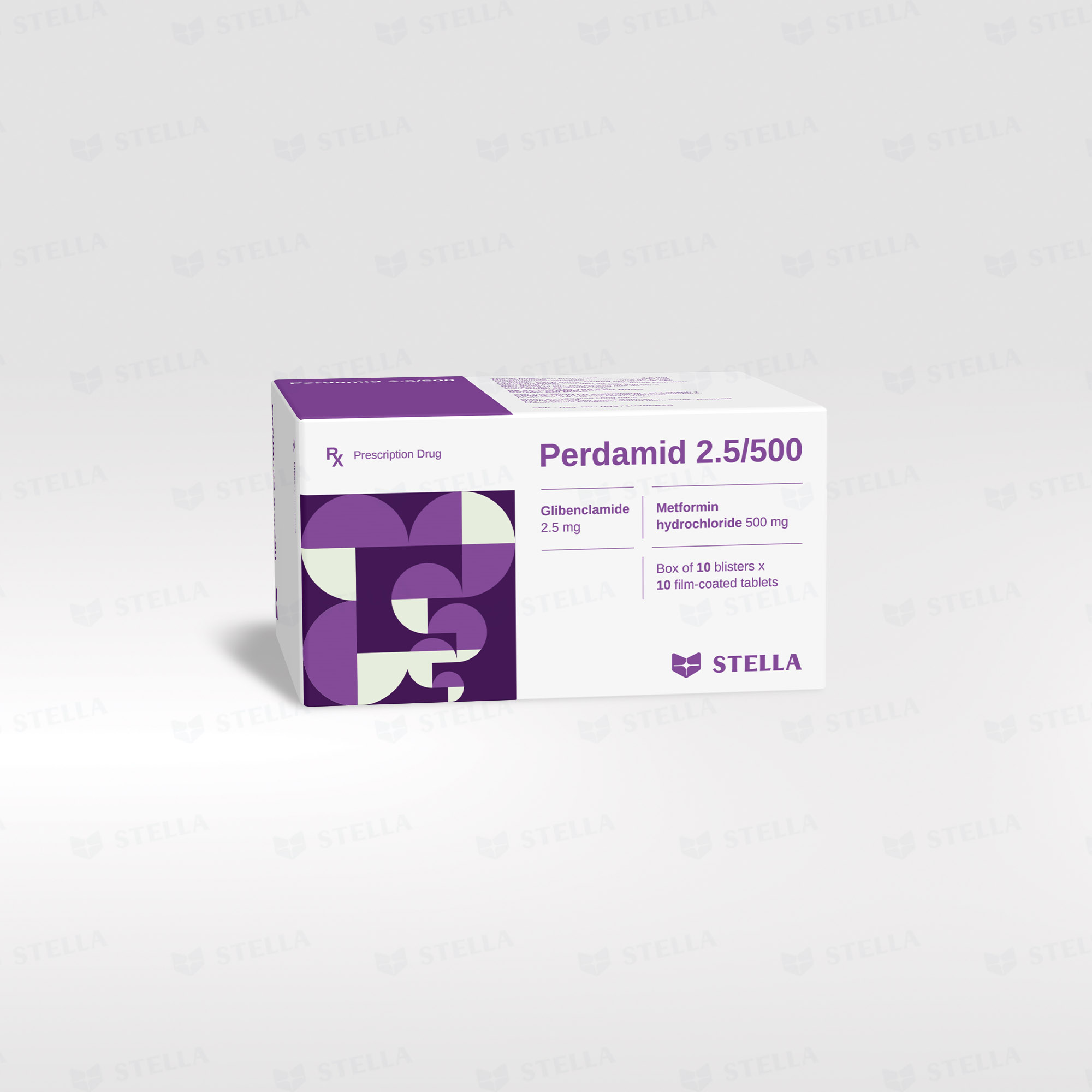
Perdamid 2.5/500
Rx

Metformin and glibenclamide have different mechanisms and sites of action, but their action is complementary. Glibenclamide stimulates pancreatic insulin secretion; metformin, by its action on peripheral (skeletal muscle) and hepatic sensitivity to insulin, decreases peripheral cellular resistance to insulin.

Pack size Box of 10 tablets, 100 tablets, 120 tablets
Shelf-life 36 months
Composition Glibenclamide 2.5 mg
Metformin hydrochloride 500 mg
Dosage forms and strengths Film-coated tablet
Product code :

PRESCRIBING INFORMATION

Indications

Treatment of type 2 diabetes in adults:

  • when diet, exercise, and initial treatment with metformin or glibenclamide do not give adequate control in glycemia.
  • as an alternative to dual therapy with metformin and glibenclamide, in patients with stable and well-controlled glycemia.

Dosage

  • Initiation of treatment in adults:
    The starting dose: 1 tablet once daily. To avoid hypoglycaemia, the starting dose should not exceed the daily dose of glibenclamide (or equivalent dose of another sulphonylurea) or metformin already being taken.
  • Alternative to dual therapy with metformin and glibenclamide in adults:
    Treatment will be started with the dosage of the fixed combination corresponding to the doses of metformin and glibenclamide initially prescribed. The dosage will then be gradually increased according to the blood glucose results.
  • Dosage adjustment:
    Dosage adjustment will be made every 2 weeks or more, in increments of 1 tablet, depending on blood glucose results. A gradual increase in the dosage may improve gastrointestinal tolerance and prevent the occurrence of hypoglycaemia.
  • Maximum daily dose recommended:
    2000 mg metformin hydrochloride/20 mg glibenclamide.
  • Geriatric population:
    The dose should be adapted to the renal function.
    Start with 1 tablet per day.

Administration

  • 1 dose/day, in the morning with breakfast for a dosage of 1 tablet/day
  • 2 doses/day, in the morning and evening, for a dosage of 2 or 4 tablets/day
  • 3 doses/day, in the morning, noon and evening, for a dosage of 3 tablets/day.
  • The tablets should be taken with meals. The distribution of the doses will be adapted according to the eating habits of each patient. However, each tablet must be followed by a meal rich enough in carbohydrates to avoid the occurrence of hypoglycemic episodes.
  • Hypersensitivity to metformin, glibenclamide or to other sulfonylureas or sulfonamides or to any of the excipient ingredients;
  • Type 1 diabetes (insulin-dependent), diabetic precoma;
  • Any type of acute metabolic acidosis (such as lactic acidosis, diabetic ketoacidosis);
  • Severe renal impairment ;
  • Acute conditions which may impair renal function such as: dehydration, severe infection, shock;
  • Disease which may cause tissue hypoxia (especially acute illness or chronic disease worsened), such as decompensated heart failure, respiratory failure, recent myocardial infarction, shock;
  • Hepatic insufficiency, acute alcohol intoxication, alcoholism;
  • Porphyria;
  • Breastfeeding;
  • In combination with miconazole.

Possible adverse reactions

  • Taste disturbances;
  • Gastrointestinal symptoms including nausea, vomiting, diarrhea, abdominal pain and loss of appetite.
  • Metformin-related lactic acidosis has been reported, mainly in patients with severe renal impairment. If metformin-related lactic acidosis is suspected, Perdamide 2.5/500 should be discontinued and the patient promptly taken to the hospital.
  • Because it contains sulfonylurea, Perdamide 2.5/500 carries a risk of hypoglycemia.
  • In cases of surgery or any cause of diabetic decompensation, Perdamide 2.5/500 should be replaced with temporary insulin therapy.
  • Perdamide 2.5/500 can be used in patients with stable chronic heart failure if cardiac and renal function are regularly monitored. Metformin is contraindicated in patients with acute and unstable heart failure.
  • Do not use glibenclamide concurrently with alcohol, phenylbutazone, or danazol.
  • Inform your doctor if you have any infections such as the flu, respiratory infections, or urinary tract infections. Patients should continue their regular diet, with a balanced distribution of carbohydrate intake throughout the day. Overweight patients should continue their calorie-restricted diet. Regular exercise is also necessary, as is taking Perdamide 2.5/500.
  • Monitoring tests for diabetes (blood glucose, HbA1c) should be performed periodically.
  • Prescribing sulfonylureas to patients with G6PD deficiency may cause hemolytic anemia.
  • Tell your doctor if you are pregnant, think you may be pregnant or are planning to become pregnant. If you find out you are pregnant while taking Perdamid, talk to your doctor so they can change your treatment.
  • Do not take Perdamid 2.5/500 if you are breast-feeding.
  • Patients should be made aware of the symptoms of hypoglycemia and should be cautious of driving and using machines.